








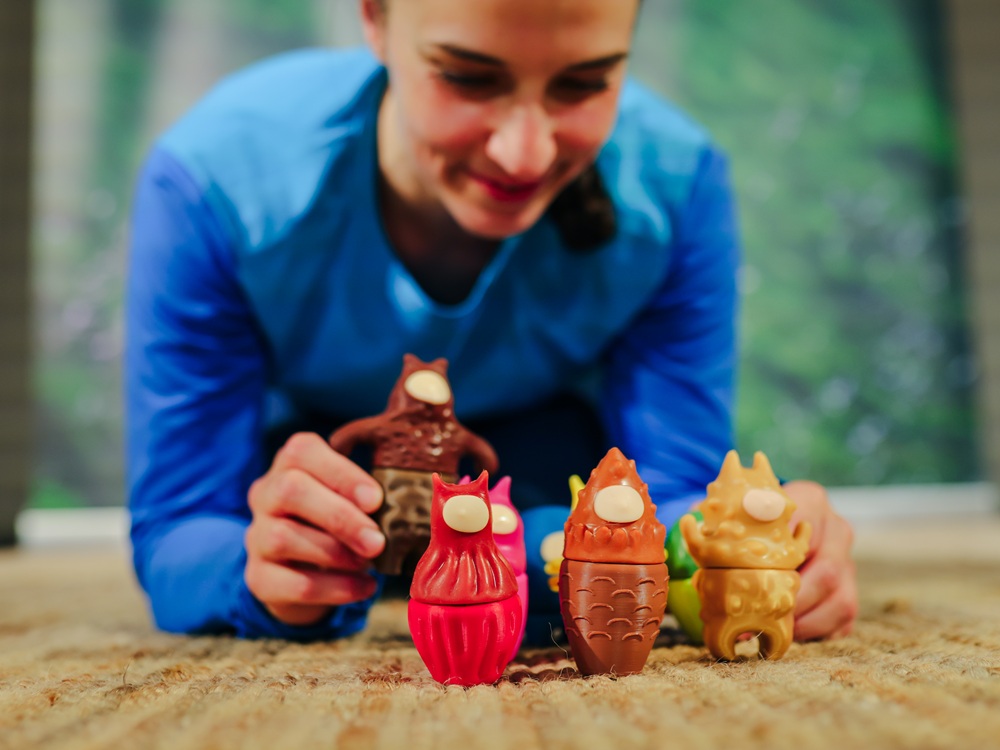
Tiny fingers, opening palms and first touches – Fogódzó places the wonder of hands and fingers at the centre of its story. Created for the youngest audiences, the non-verbal production uses movement, objects and rhythmic singing to create a playful world centred around touch.
Songs surround the audience as the movements of the hands gradually come together to form a story. Each small gesture is fleeting, yet marks the beginning of a new stage in life. Fogódzó celebrates the first moments of connection in a gentle and sensitive performance created especially for babies.
What role can art and theatre play at the earliest stage of life? How can a puppet theatre experience support the bond between parents and children? These were among the questions explored by the creative team behind the latest baby theatre production of the Vojtina Puppet Theatre: dramaturg Viktória Szántó, music therapist Júlia Paár and director Anna Markó-Valentyik.
The non-verbal production, which premiered on Sunday and features rhythmic songs, is recommended for babies aged between three months and three years and their parents. At its centre is the grasp reflex, using gentle movements to evoke children’s first experiences with their hands and touch. Small, everyday gestures are given special emphasis, as they play an important role in the development of the parent-child relationship.
In Zsuzsa Lehőcz’s one-person performance, the magic of hands and fingers is complemented by songs that almost surround the space, while the gestures and music come together to form a coherent story. In this baby-focused session, children can discover the world of touch, one of the most fundamental forms of sensory perception, while parents can also take away useful information.
Beyond offering a special opportunity for quality time together, the production also aims to provide professional support through accessible educational material about infant reflexes, their role in development and the situations in which it may be advisable to consult a specialist.
Director Anna Markó-Valentyik said her own experiences and those of people around her made her feel that it was particularly important to create productions for this age group that go beyond a purely theatrical approach.
“We wanted to draw both children’s and parents’ attention to the importance and characteristics of different stages of development, as a form of gentle education. I believe it is important to focus not only on playfulness, but also on genuine trust and spending quality time together,” she said.
In an interview with the puppet theatre, dramaturg Viktória Szántó explained that the rehearsal process was preceded by a complex preparatory phase.
“In connection with the supplementary guide accompanying the performance, we contacted the health visitor network and collected the contact details of special education professionals who can provide expert assistance on infant reflexes and movement therapy,” she said.
Performer Zsuzsa Lehőcz said children will encounter familiar challenges and discoveries during the session.
“The performance is created for the youngest age group, so I have to pay very close attention to their movements and reactions. I think they will feel at home, because during the performance I also experience the difficulties and joys that they encounter at this age,” Lehőcz said.
Photo: Krisztina Csatáry-Nagy


