






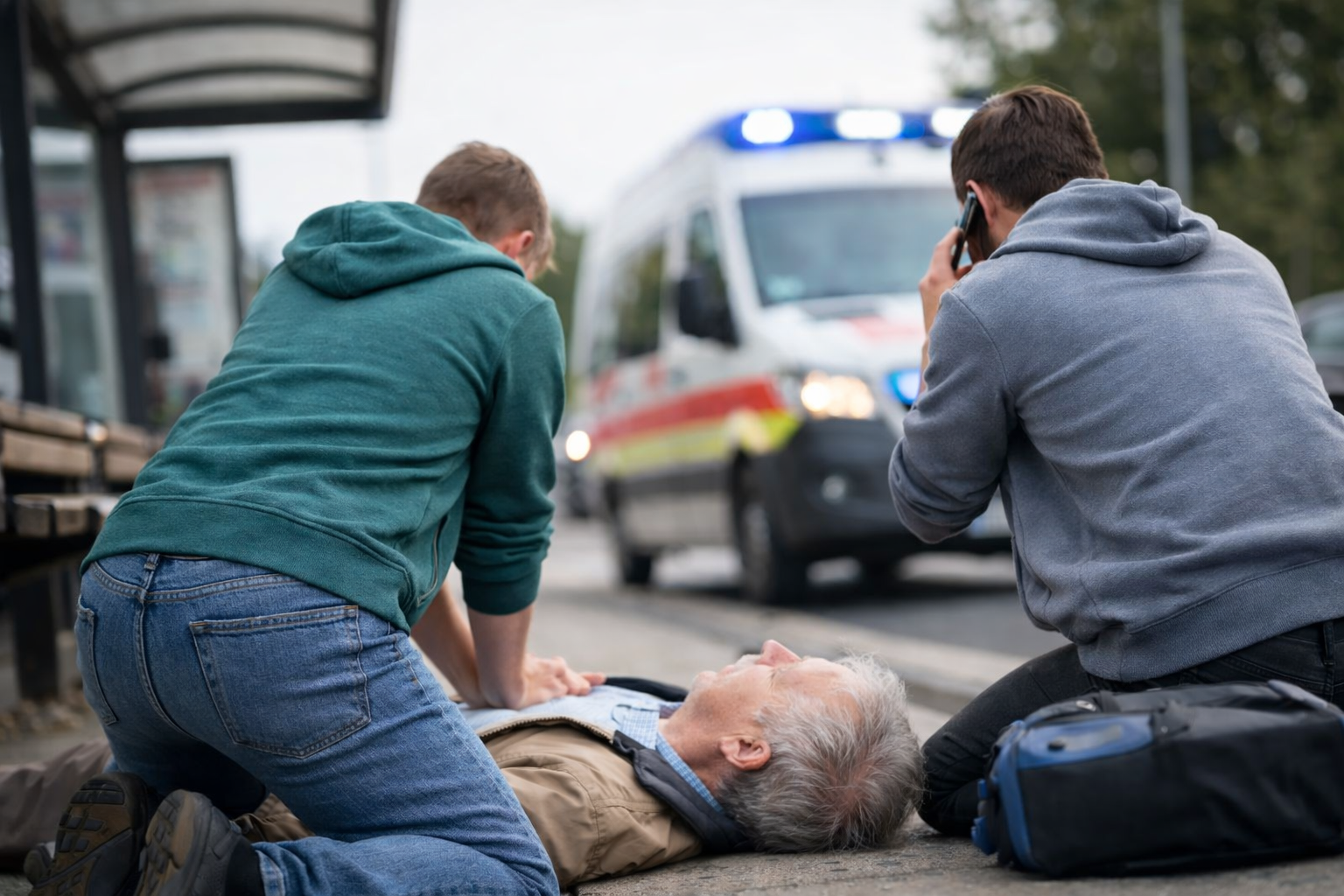
The key to fighting sudden cardiac death is bystander CPR and a functioning network of defibrillators. Every minute counts in such cases, and inaction is the worst decision, the Hungarian Society of Cardiology (MKT) and the Hungarian Resuscitation Council (MRT) said in a statement to the Hungarian News Agency (MTI) ahead of Sunday’s Heart Day event.
In their joint statement, the two professional organizations said that survival rates following sudden cardiac arrest outside hospitals in Hungary could be significantly improved by strengthening first-aid skills among the public, strategically placing automated external defibrillators (AEDs), and maintaining accurate records.
According to the organizations, coronary artery disease is the most common cause of sudden cardiac arrest outside hospitals. Although the average age of those affected is around 70 and the majority (65 percent) are men, younger people and athletes can also be affected.
They quoted Enikő Kovács, president of the Hungarian Resuscitation Council, as saying that cases occurring at a young age highlight the importance of prevention and early detection. In cases of a family history of sudden cardiac death at a young age or unexplained fainting, a cardiological examination is recommended. Time is the most critical factor for survival: the brain suffers irreversible damage after five minutes without circulation, while in cases involving a shockable rhythm, every minute of delay in defibrillation reduces the chance of survival by 3–6 percent.
The organizations highlighted Denmark as an example, where the proportion of cases in which CPR was initiated by bystanders increased from 18 percent to 60 percent between 2001 and 2013, while 30-day survival more than doubled. By 2018, spontaneous circulation had already been restored in 24 percent of cases by the time patients arrived at hospital. In Hungary, by contrast, the rate is lower: according to a nationwide study covering around 130,000 cases between 2018 and 2023, the rate of return of spontaneous circulation (ROSC) at the scene was 9.1 percent.
Endre Zima, head of the Intensive Care Unit at the Városmajor Heart and Vascular Center, stressed that people should not wait for professional help to arrive: chest compressions should be started immediately, and if an AED is available nearby, it should be used.
According to the statement, the SzívCity app currently registers and regularly monitors more than 2,000 AEDs in Hungary, helping the National Ambulance Service and members of the public who provide emergency assistance. The organizations also noted that one of the foundations of successful programs abroad is mandatory CPR training in schools.
Rapid recognition, immediate bystander CPR, the use of accessible automated external defibrillators (AEDs), and network development based on accurate data could together save thousands of lives, the organizations concluded. They also called for the creation of a unified nationwide program to coordinate the installation, registration and maintenance of AEDs, as well as related training.
As part of these efforts, Sunday’s Heart Day event in Múzeumkert will feature a CPR flash mob and live demonstrations for visitors.
(MTI)
Kezdőkép: illusztráció.