






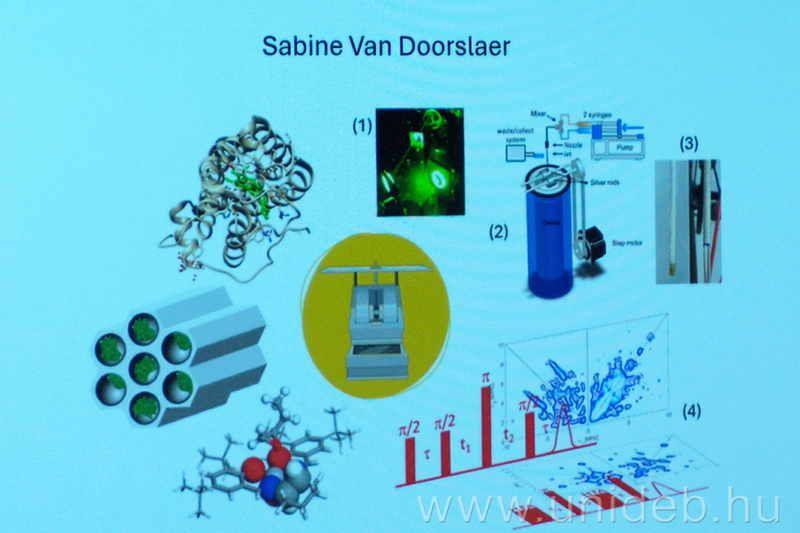
An international conference hosted once again by the University of Debrecen from September 6 to 9 is focusing on the precise understanding of inorganic chemical processes that are crucial to modern drug development, industrial catalysis and environmental protection. At the 7th ECIRM international conference, one of Europe’s most prestigious forums on inorganic reaction kinetics and mechanism studies, more than 60 researchers are presenting their latest findings.
Research into reaction mechanisms helps scientists understand the chemical processes taking place in our environment. Mapping these processes at the molecular level is essential for developing more effective medicines, as well as creating new catalysts that can support green energy production and carbon dioxide capture.
“Everyone knows that if we light a match, it catches fire. What fewer people know is that this process involves a great many reaction steps and produces numerous intermediate products that disappear after a while. We want to understand the order in which these reaction steps take place and how quickly they occur – this is what we mean by a reaction mechanism,” explained István Fábián, who launched the European Colloquium on Inorganic Reaction Mechanisms (ECIRM) conference in Debrecen in 2013.
The professor emeritus of the Institute of Chemistry at the University of Debrecen’s Faculty of Science and Technology recalled that, thanks to the enthusiasm of international partners, the initiative soon developed into an international travelling conference. This year’s seventh edition has attracted renowned experts not only from numerous European countries but also from overseas.
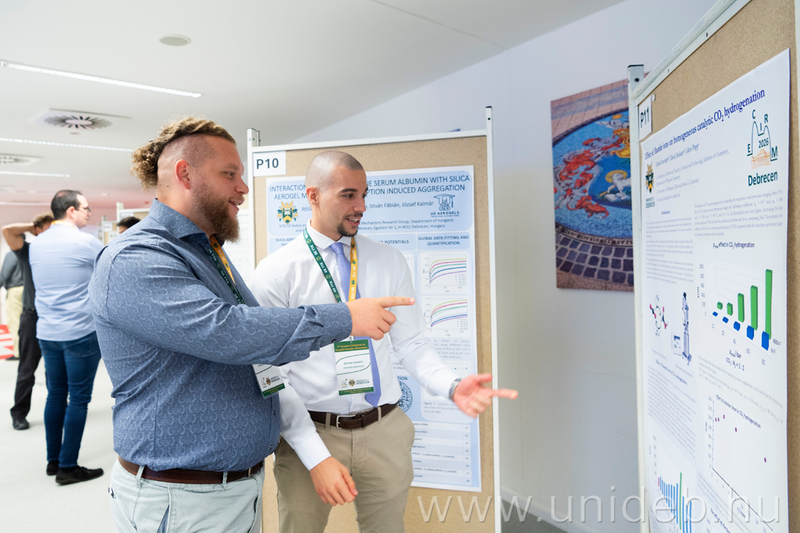
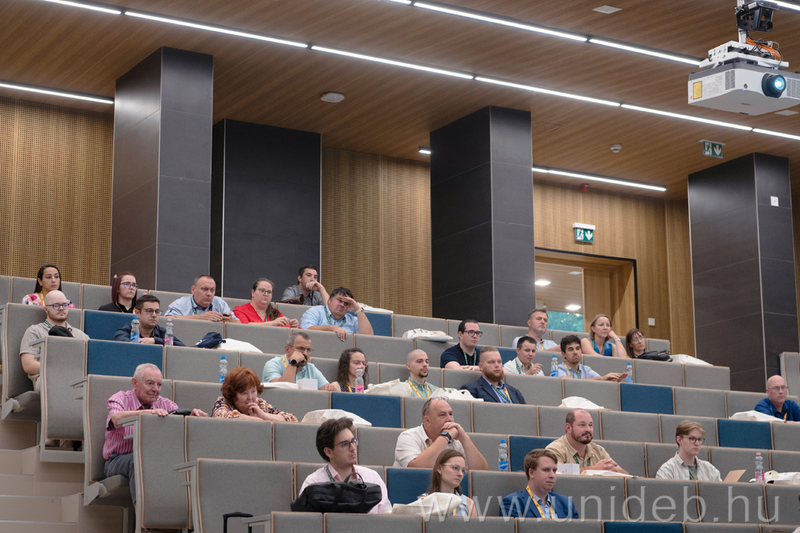
During the four-day conference, more than 60 participants are presenting the latest scientific findings on redox processes in homogeneous and heterogeneous phases, catalysis and organometallic chemistry through lectures and poster sessions. ECIRM 2026 places particular emphasis on non-traditional analytical methods that provide new molecular-level insights into the functioning of reactive systems.
At the opening ceremony on Sunday, the dean of the Faculty of Science and Technology of the University of Debrecen stressed that the faculty’s six institutes form a multidisciplinary ecosystem in which fundamental scientific discoveries continuously drive modern technological innovation.
“The six organisational units of the Faculty of Science and Technology hold the Hungarian Academy of Sciences’ recognised Centre of Excellence status. We are home to ten elite research groups supported by the Hungarian Research Network (HUN-REN), as well as two Hungarian flagship projects and two Élvonal research programmes comparable to ERC grants. Winning two such grants is an extraordinary achievement for a single faculty, particularly outside the capital. Our infrastructure further strengthens this work: three of our facilities are among the country’s Top 50 research infrastructures,” Szilárd Szabó pointed out.
The faculty’s leader also highlighted the key role of the Institute of Chemistry, which ranks among the country’s leading institutions and whose outstanding researchers received prestigious honours at the University of Debrecen’s academic year opening ceremony that same day. Professors György Bazsa and István Fábián were awarded the title of Rector Emeritus, with György Bazsa also receiving the University of Debrecen’s Medal of Honour, while Katalin Várnagy received the Pro Universitate Award.
The research groups of the Institute of Chemistry have extensive international networks, with several successful research projects being carried out in the field, ranging from the study of contrast agents used in MRI diagnostic techniques to the development of functionalised aerogels. A research project related to space technology was also recently completed as part of these activities.
(unideb.hu)


