








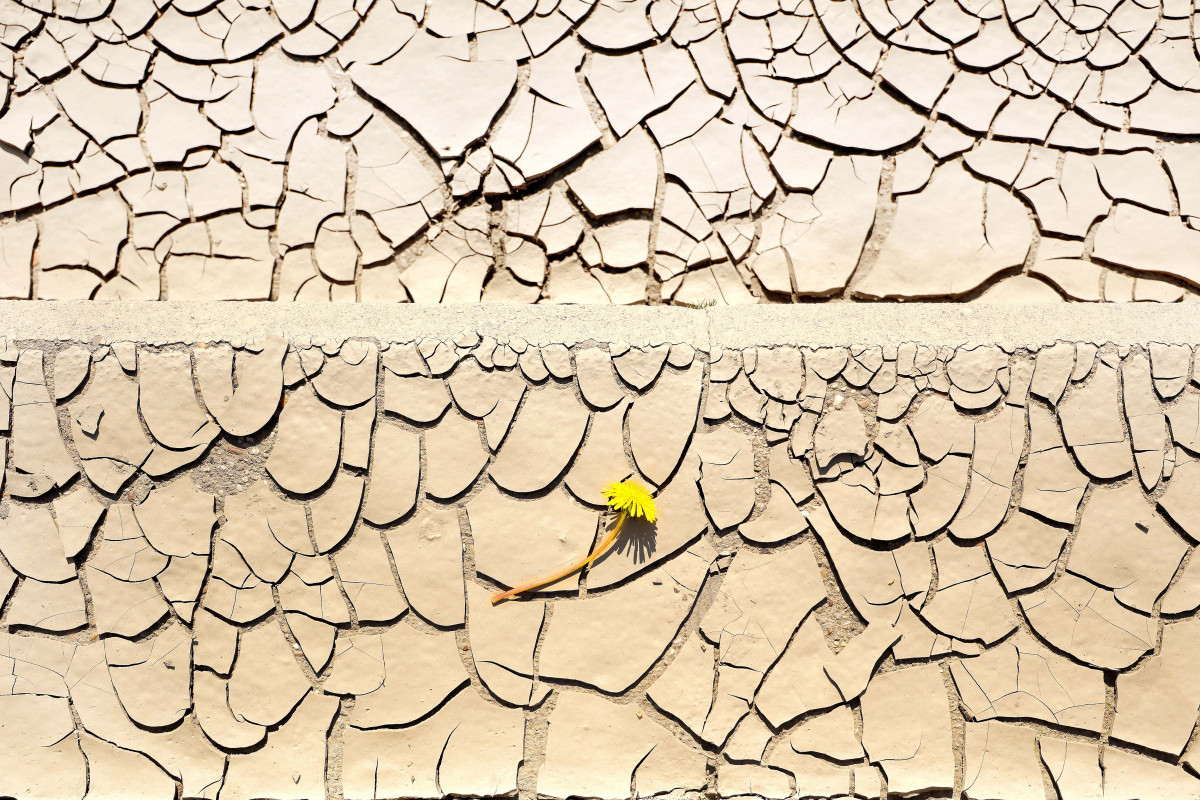
Hungary is becoming increasingly dry despite only a slight decrease in annual precipitation, according to research by scientists at the Department of Meteorology at Eötvös Loránd University (ELTE).
Researchers Péter Szabó and Rita Pongrácz of ELTE’s Department of Meteorology examined how Hungary’s climate has changed over the past five decades by considering both heat and water availability, as well as which present-day European climates Hungary is likely to increasingly resemble in the coming decades, masfelfok.hu reported to MTI on Wednesday.
Hungary has warmed so much over the past half century that in recent years, around half of the country has experienced a climate similar to that of central Spain on average, according to the study.
At the same time, although annual precipitation has changed only slightly, water availability is declining. A warmer climate increases evaporation, meaning that even with the same amount of rainfall, less water may remain available in the system.
To map these changes, the researchers used the Thornthwaite climate classification, which takes into account not only temperature and precipitation but also the month-by-month interactions that are important for the water balance, including processes between the atmosphere and the land surface.
Looking at observations from 1972 to 2025, Hungary belonged predominantly to the moderately dry climate zone. In terms of heat availability, the country was relatively homogeneous in the 1970s and 1980s and belonged to the slightly warm climate zone. However, as a result of global warming, around half of Hungary’s territory has now moved into the moderately warm climate zone. In Europe, this level of heat availability is currently found farther south, including in the Po Valley, southwestern France and along the Romanian section of the Danube.
For the future, the researchers examined a scenario in which global greenhouse gas emissions are significantly reduced after 2040. Based on currently known commitments and plans, Hungary is likely to remain close to this medium-emissions pathway by 2100, although the country is expected to slightly exceed the global average temperature projected under this scenario.
The coming decades are expected to bring less favourable trends, with the proportion of the semi-arid climate zone continuing to increase. After 2040, drier climate conditions are expected to cover an average of 67% of the country.
In terms of heat availability, between 2021 and 2040, the moderately warm climate could cover an average of 67% of the country, compared with 49% today, potentially rising to as much as 84% later on. After 2060, some areas could occasionally enter the warm climate zone, which currently corresponds most closely to the climatic conditions of Mediterranean lowlands south of Rome.
The combined shift towards a drier climate, with lower water availability, and a warmer climate, with greater heat availability, is creating conditions in Hungary that are currently characteristic of parts of the Mediterranean region. These changes could place significant pressure on soils, natural vegetation and agricultural crops.
Under the medium scenario examined, Hungary is expected to fall within the semi-arid climate zone for nearly one-quarter of the time and area combined in the future, while at least four-fifths of the country will fall into the moderately warm heat-availability category. Today, this combination of climate characteristics is predominantly found farther south in Europe.
Hungary’s climate is increasingly approaching that of present-day regions such as central Spain, the area around the Danube Delta and northern Greece.
The natural vegetation of semi-arid and moderately warm climate zones differs significantly from what is traditionally found in Hungary. These regions are also characterised by different agricultural crops, including olives, figs, almonds, various citrus fruits and red grape varieties requiring more heat. However, this does not mean that these crops can simply replace existing Hungarian crops, as soil conditions, frost risk and farming conditions are also important factors.
The conditions for growing such crops and any necessary adaptations need to be examined in detail before agricultural production systems are completely transformed over large areas.
The researchers therefore stress the importance of keeping global emissions at least close to the medium pathway examined in the study. This would require a significant reduction in energy consumption and a rapid transition to renewable energy sources.
One of the most important lessons from the changes taking place in Hungary is that increasing dryness cannot be assessed simply by looking at how much rain falls. In a warmer climate, the same amount of precipitation leaves less water available for soils, vegetation and agriculture, the researchers concluded.