







At the invitation of the Municipality of Debrecen, the Hungarian Academy in Rome, and the Papal Hungarian Ecclesiastical Institute, a special event is being prepared at the end of November in Rome, marking the opening of the Advent season.
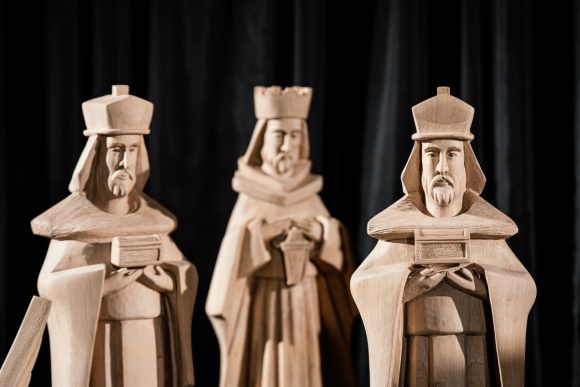
To honor the Holy Year, the city of Debrecen will present a nativity sculpture group at the Hungarian Academy in Rome and the Papal Hungarian Ecclesiastical Institute. The works were first displayed in the arcade of the Old Town Hall on 15 November 2025.
The program is made possible in part through the support of the Ministry of Culture and Innovation for the Holy Year and the contribution of the city of Debrecen. The nativity will remain in Rome even after the Holy Year concludes. In Rome, the nativity will be blessed by Cardinal Rolandas Makrickas of the Santa Maria Maggiore Basilica, which preserves the relic of the Holy Manger.
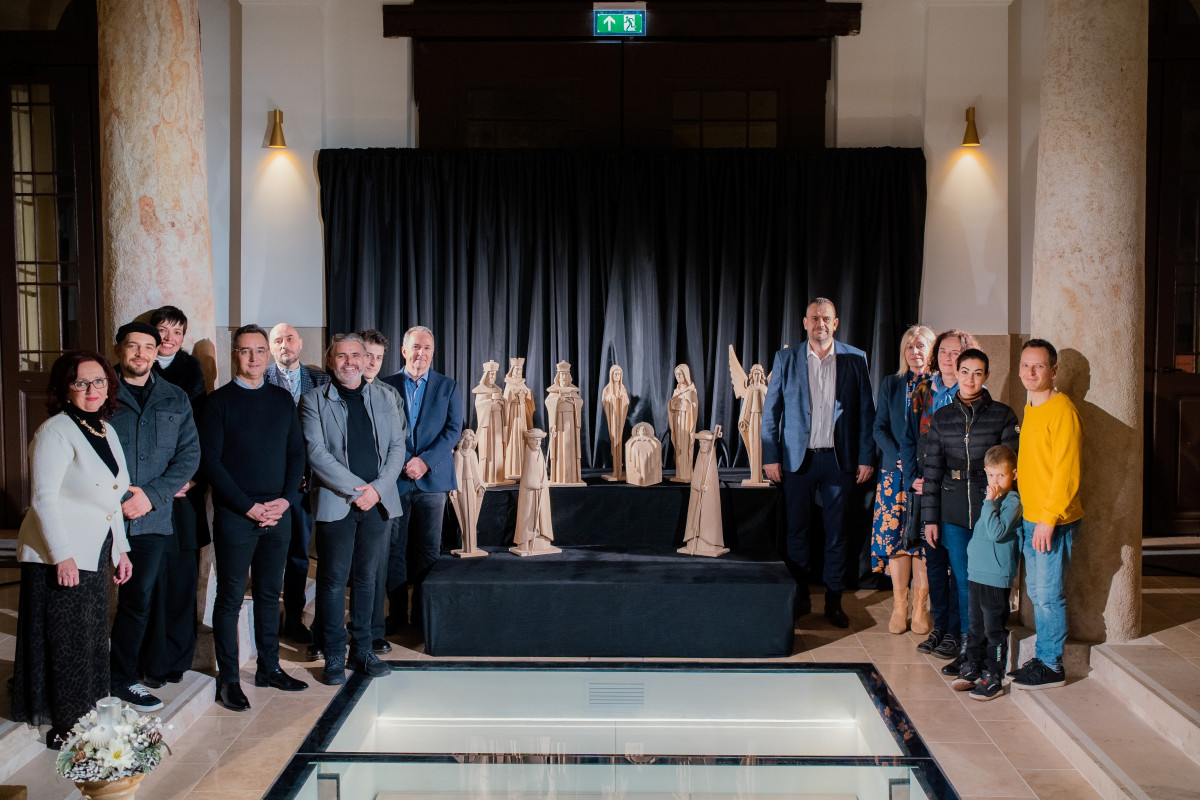
“Debrecen, the Calvinist Rome, is visiting the heart of the Catholic Church in Rome, where it will present a unique handcrafted nativity sculpture group — a beautiful symbol of the Hungarian Christmas tradition. We are bringing a piece of Debrecen to Rome,” said Mayor László Papp.
He noted that the Church and Christianity have played a central role in Debrecen for centuries. The city was founded and shaped by the Reformed Church, which made Debrecen the Hungarian center of Calvinism. Today, it is also a center for Hungarian Christian churches. The mayor expressed his belief that the mission represented by the nativity sculpture group will strengthen both the city and its Christian faith.
Károly Fekete, bishop of the Tiszántúl Reformed Church District, recalled Pope John Paul II’s visit to Debrecen in 1991 and his speech at the Great Church, noting how the pope placed a wreath at the memorial for Protestant galley preacher martyrs as a gesture of reconciliation between Catholic and Reformed believers. He emphasized the importance of peace — not just political, economic, or cultural, but inner and outer peace — as the central message of Advent 2025.
Zoltán Krakomperger, vicar general of the Debrecen-Nyíregyháza Diocese, explained that the joint visit of Debrecen’s civic and church leaders to Rome aligns with the theme of the 2025 Holy Year: the Pilgrim of Hope. He highlighted that the foundation of hope is Jesus Christ, whose crucifixion and resurrection provide hope not only for the living but for all who strive for good.
János Terdik, pastoral vicar of the Hajdúdorog Archdiocese, noted that the Greek Catholic Church begins its Christmas preparations on 15 November, with the first Advent candle lit on Sunday. He explained that in the nativity sculpture group, the child Christ is the central figure, but that Rome, the Catholic Church, and Debrecen — the center of the Reformation — all point to Christ as the true center for every Christian.
Lóránt Bocskor-Salló, deputy director of the Csokonai National Theatre, shared a personal story, recalling how his family was welcomed in Debrecen as warmly as shepherds welcomed the Christ child. He explained that the nativity sculpture, made of wood, symbolizes a turning toward God and represents the connection between faith and culture.
Hunor Pál, actor and sculptor at the Csokonai National Theatre, described the creative process, which began in April 2025. He aimed to convey the sacred message of the nativity in a way that resonates with contemporary audiences. Focusing on simplicity, clean forms, and elegant lines, the sculptures differ slightly from traditional nativity depictions. He particularly considered how to express the message of light in the child Christ, titling the work: “Timelessness in Holiness.”
The nativity house surrounding the sculpture was designed by Ágota Matyi, set designer, with the help of the theatre’s scenic and decorative staff.
The ceremony for presenting the sculpture will feature performances by the Kodály Philharmonic musicians, artists from the University of Debrecen’s Popular Music Institute, and violinist Zoltán Tordai, a recent recipient of the Prima Prize. The Hajdúsági Gastronomic Club will introduce traditional Hungarian dishes to the Roman audience.
Debrecen was also invited, via a public call, to participate in the “100 Nativity Scenes” exhibition at the Vatican, featuring a gingerbread nativity created by folk artist Judit Gődény. The works were evaluated by the House of Traditions’ Folk Art Council and rated in the Masterpiece and Craftsmanship category. The exhibition runs from 6 December 2025 to 6 January 2026 in the Vatican’s arcade.
The nativity sculpture and the visiting delegation carry Debrecen’s festive message: that faith, love, and cooperation transcend borders.
In Rome, the event is organized with the participation of the Hungarian Academy in Rome, the Papal Hungarian Ecclesiastical Institute, and the Hungarian Embassy to the Holy See. The Debrecen nativity will be on display in the ornamental courtyard of the Hungarian Academy for the general public, pilgrims, and tourists until 6 January 2026.
Before its departure for Rome, the sculpture can be viewed at the arcade of the Old Town Hall from 16 to 18 November, 10:00–18:00.
Photo: debrecen.hu
(debrecen.hu)