







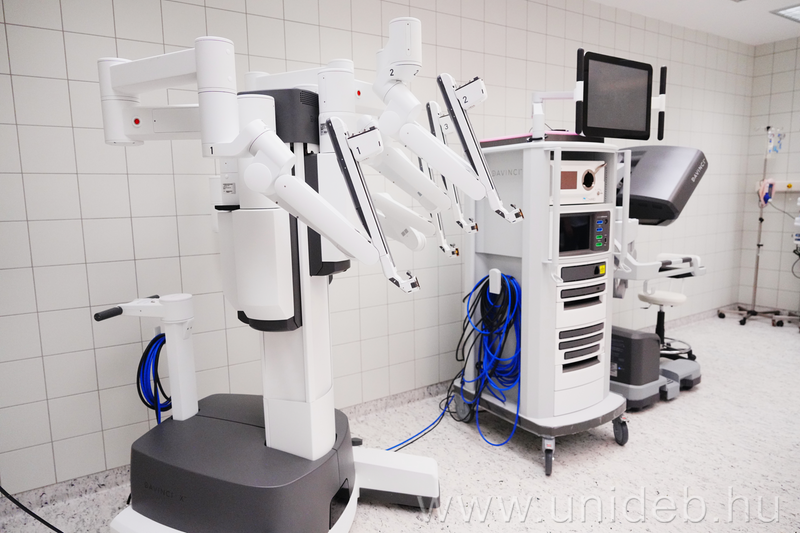
Another milestone has been reached in the patient care activities of the Clinical Centre of the University of Debrecen. At the Department of Surgery, robot-assisted thoracic surgical procedures are now being performed regularly, opening new dimensions for patients in the region. Using 21st-century cutting-edge technology, surgeries are more precise and safer, reducing the risk of complications and enabling faster recovery.
The Da Vinci robotic surgical system has been used at the Clinical Centre of the University of Debrecen since 2024, initially in general surgery, urology, and gynaecology, primarily for oncological procedures. The recently installed second robot has now made it possible to also perform ENT and thoracic surgical procedures using this technique.
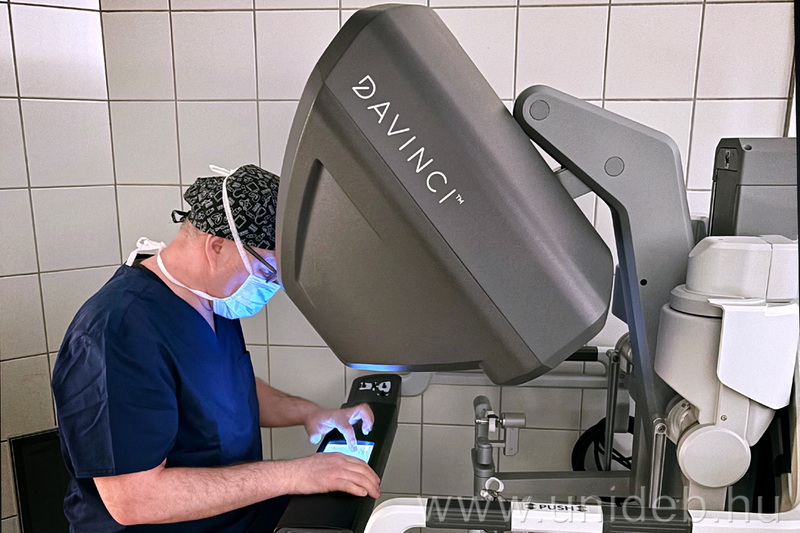
“As the use of the Da Vinci robotic surgical system in thoracic surgery shows, this is not only about using a modern tool, but about a completely new approach. The surgeon does not stand directly over the patient, but sits at a special console and views the surgical field in 3D with tenfold magnification. The robotic arms are capable of a range of motion beyond the physical limits of the human wrist, allowing extremely precise procedures even in the narrowest spaces,” explained Associate Professor István Takács, head of the Thoracic Surgery Unit of the Department of Surgery at the Clinical Centre of the University of Debrecen.
Takács emphasised that thoracic surgery traditionally places a heavy burden on the body, but the minimally invasive nature of robotic technology offers numerous advantages, including safer and more precise procedures, reduced blood loss, and faster recovery.
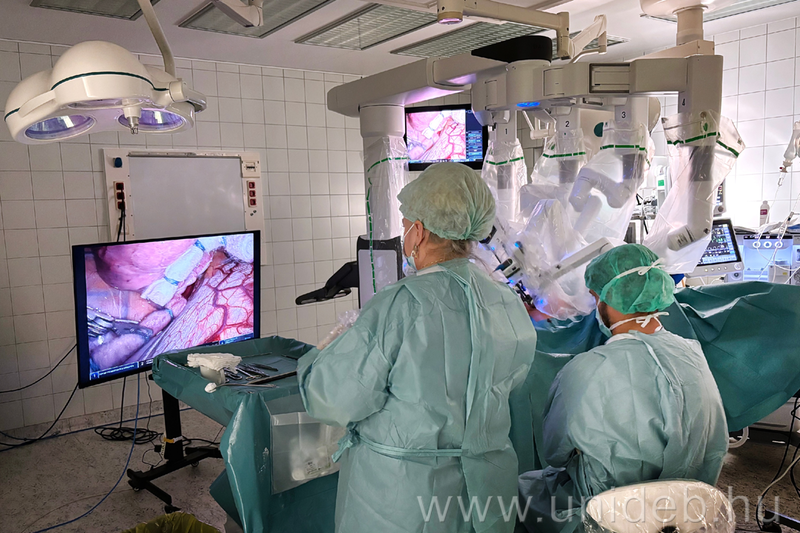
“Thanks to smaller incisions, blood loss is reduced, and the precise technology results in less tissue trauma, which decreases postoperative pain and the need for pain medication. In addition, patients recover significantly faster and can return to their daily activities sooner. The 3D visualisation provides greater safety for surgeons, enabling the precise identification and preservation of critical structures such as blood vessels, nerves, and the bronchial system. The more precise surgical technique offered by robotic technology not only increases safety but also provides oncological advantages, for example through multi-regional lymph node removal and the creation of adequate tumour-free margins,” he added.
Following successful training, regular weekly robot-assisted thoracic surgeries have now begun at the Department of Surgery of the Clinical Centre.
“The launch of the programme was preceded by a prestigious international training series. The clinic’s staff—surgeons, assistants, and operating room personnel—acquired the technology in renowned European training centres. After successful examinations and initial supervised procedures, we have now reached a level where robotic surgery has become part of our weekly routine. These specialised operations are performed on designated days each week,” said Associate Professor Dezső Tóth, director of the Department of Surgery at the Clinical Centre of the University of Debrecen and head of the Robotic Surgery Centre.
The weekly procedures not only represent a breakthrough in the treatment of oncological diseases (such as early-stage lung cancer surgery) but also strengthen the clinic’s educational profile. The Debrecen surgical team aims to further expand the range of robot-assisted procedures, ensuring that patients receive the highest level of world-class care.
(unideb.hu)