








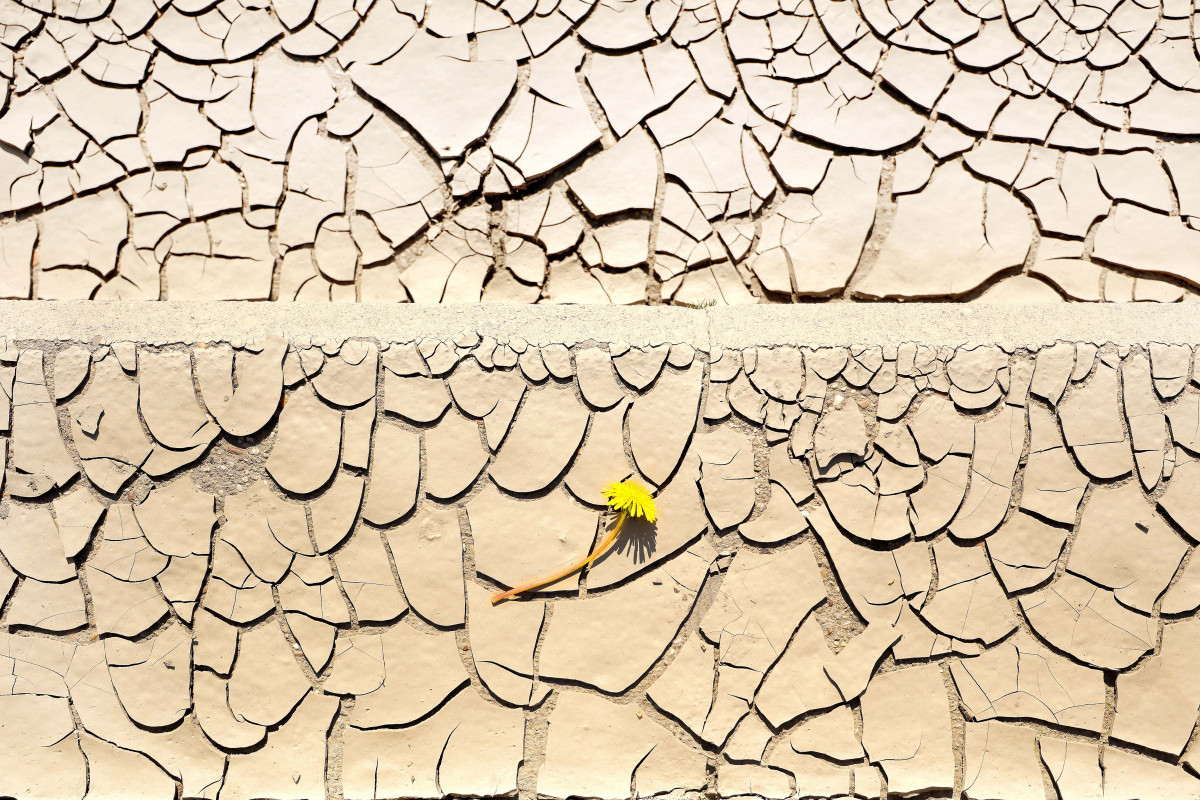
The lack of moisture in the soil is intensifying the heat across Hungary, as water’s natural cooling effect is absent. As a result, daytime temperatures are soaring and row crops are withering in the fields. Although temperatures will ease somewhat on Friday, only limited rainfall is expected, and dry conditions are forecast to return next week, according to the Hungarian Meteorological Service (HungaroMet) in its agrometeorological analysis published on Thursday.
The report notes that since the middle of last week, only isolated showers and thunderstorms occurred on Sunday and Monday. Rainfall exceeding 5–10 millimetres was recorded in only a few locations.
Over the past 30 days, much of the Great Hungarian Plain has received less than five millimetres of rain, resulting in an enormous precipitation deficit compared with the long-term average. Since May, most parts of Hungary have accumulated 70–140 millimetres less rainfall than normal.
Soil moisture has nearly disappeared across the country. In most regions, the soil is critically dry, with moisture levels falling below 25% of the plant-available water capacity.
Daytime highs hovered around 35°C in the middle of last week before climbing steadily. From Friday onward, temperatures approached 40°C across large parts of the country, and by Wednesday several areas recorded 41°C.
According to HungaroMet, this extreme heat is not being caused by air masses from the Sahara. Instead, the air is heating up over Central Europe itself because the widespread drought has left soils devoid of moisture, eliminating the cooling effect of evaporation.
The report highlights that sunflower crops are undergoing forced ripening, with satellite observations showing exceptionally low green biomass—over large areas even lower than during the severe drought of 2022.
Non-irrigated corn fields are in very poor condition across most of Hungary. Forced ripening has begun here as well, and many areas are already experiencing crop dieback. Conditions remain somewhat more favourable only in the southwestern part of Transdanubia. Elsewhere, the drought that has persisted almost continuously since the beginning of the growing season has caused irreversible damage, which is now being exacerbated by the current heatwave. Around Miskolc, corn has reached the milk stage of development, and while some green fields with healthy ears remain, the soil there is also bone dry.
At present, most of Hungary is experiencing severe or extreme agricultural drought, which has worsened over the past ten days. During the 127-day period since 1 April, at least 30% of the country’s territory has experienced at least moderate drought for more than 80% of the time. The highest number of drought days has been recorded in Pest County (112 days) and Hajdú-Bihar County (110 days), while Zala County has seen the fewest, with 40 days.
With no significant rainfall expected over the next 8–10 days, the drought is forecast to intensify further.
In recent weeks, plant leaves have been wet for no more than a few hours at a time, which is insufficient for fungal diseases to develop and spread. Extended periods of high humidity have also been absent.
After Thursday’s peak heat, cooler air will arrive on Friday, reducing temperatures by 5–10°C. Showers and thunderstorms are most likely on Friday, with isolated showers also possible on Saturday and Tuesday. However, these are expected to bring meaningful rainfall only to small, localized areas.
HungaroMet warns that the area affected by the country’s highest level of severe agricultural drought continues to expand, with atmospheric drought making conditions even worse. During the day, relative humidity is expected to fall below 30% over large areas, and below 20% in some places.
According to the forecast, more widespread rainy weather is unlikely before around 20 August.
(MTI)