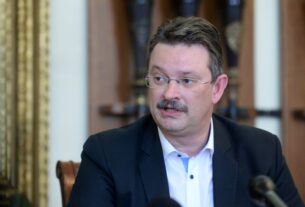







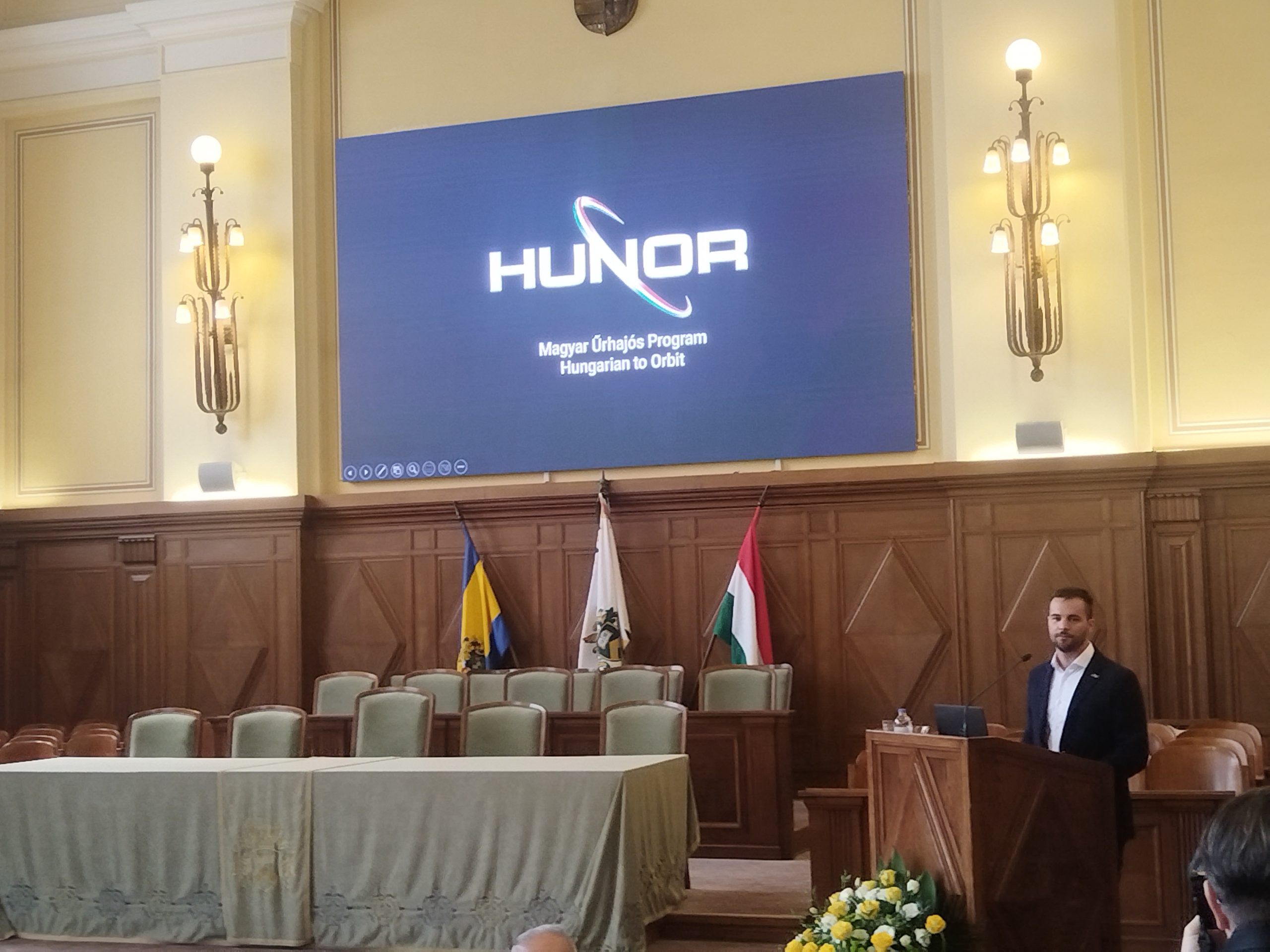
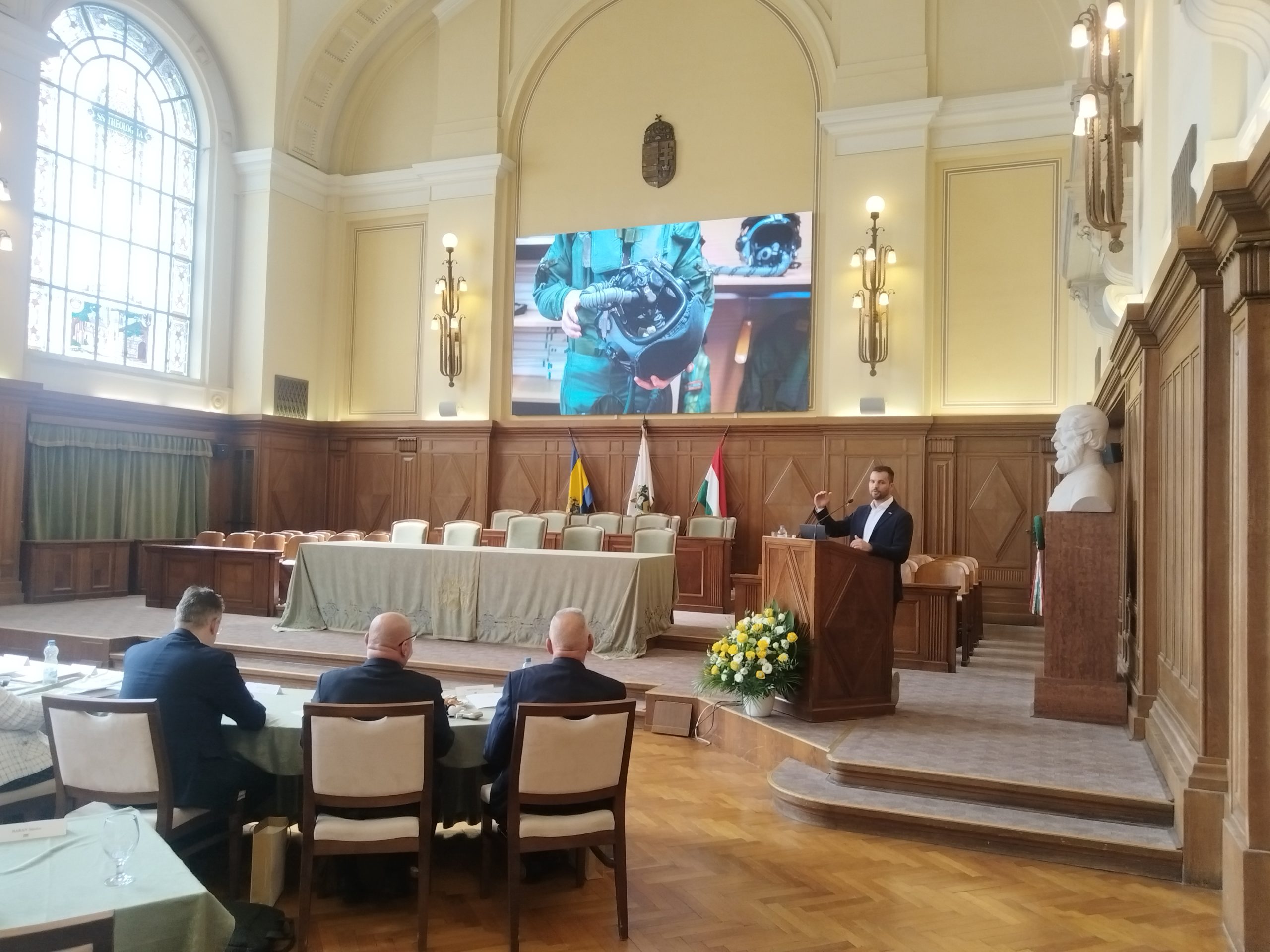
Tibor Kapu, Hungary’s second astronaut, gave an in-depth lecture at the University of Debrecen, where he spoke to students and space enthusiasts about the Hungarian Astronaut Program (HUNOR), the rigorous selection and training process, and the groundbreaking experiments he conducted aboard the International Space Station (ISS).
Kapu recalled that the HUNOR program was launched in January 2022 and attracted enormous interest, with 247 applicants submitting detailed documentation to meet strict medical, psychological, and professional criteria. After several rounds of testing and screening, the number was gradually reduced until only eight candidates made it to the final stage.
At this point, Hungarian-specific elements were added to the program: the candidates, for instance, flew in Gripen fighter jets to experience extreme G-forces, and underwent demanding technical bootcamps at Csillebérc to test teamwork and stress resilience in harsh conditions.
By spring 2023, the top four began official training, which included small aircraft pilot licenses, aerobatics, and six-day isolation sessions designed to simulate the confined environment of the ISS. “We had no sunlight, no fresh air, and limited water. It was both a psychological test and preparation for life aboard the station,” Kapu explained.
In May 2024, Kapu and his colleague Gyula moved to Houston for NASA training. There they learned US protocols, practiced in simulators, completed weightlessness exercises, and even studied Russian to communicate with cosmonauts on the ISS.
The culmination came on 25 June 2025, when Kapu launched aboard SpaceX’s Crew Dragon to the ISS. “The moment of liftoff was cathartic—I would relive it any day,” he told the audience.
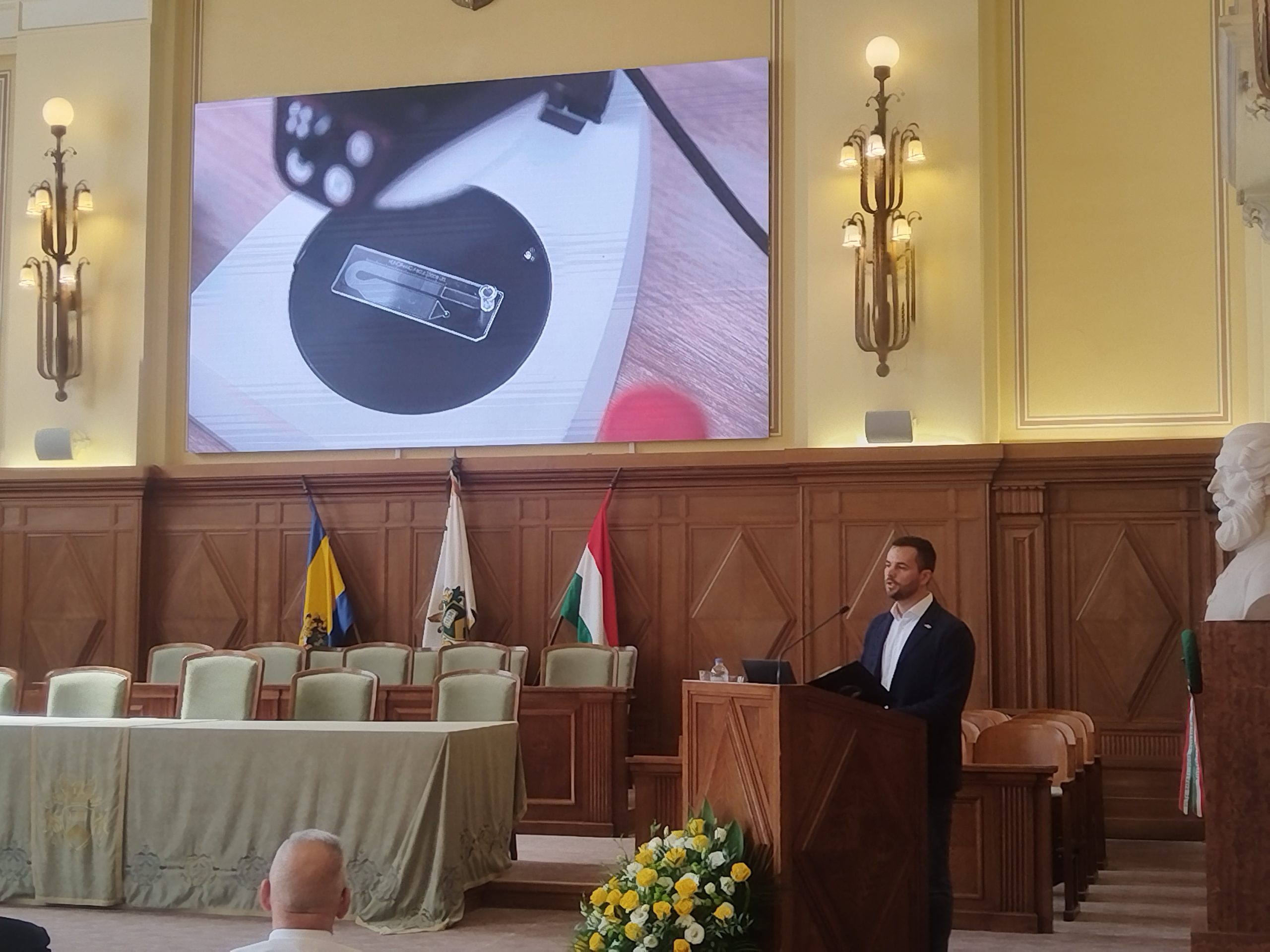
Hungarian science in orbit
During his lecture, Kapu presented six of the 25 Hungarian experiments carried out in space:
-
Microfluidics studies using lightweight devices to examine fluids, drugs, and biological samples in microgravity.
-
The “Diros” experiment, modeling Jupiter- and Saturn-like atmospheric phenomena with water and tracer particles.
-
The “Random” dosimeter, which measured cosmic radiation as well as temperature, humidity, and CO₂ levels.
-
Transcranial Doppler tests monitoring cerebral blood flow.
-
Virtual reality–based neurological assessments.
-
Plant cultivation trials, successfully growing peppers, wheat, and radishes in artificial conditions.
“These experiments not only advance Hungarian science but also contribute to global space research,” Kapu emphasized. “They may be essential for the safety and success of long-term missions—possibly even to Mars.”
Questions from students
-
What was the hardest moment in training?
“The isolation exercise. Six days completely shut off from the world tested both body and mind—it showed who could endure the solitude of space.” -
What personal items did you take with you?
“Some family photos and a small Hungarian flag given to me by my son. They gave me strength up there.” -
Most unforgettable moment on the ISS?
“Looking out of the Cupola and seeing Earth for the first time. That view is indescribable—worth every struggle.” -
How do astronauts sleep?
“In sleeping bags strapped to the wall, so we don’t float away. Surprisingly restful, with no gravity pressing on the joints.” -
What advice for future astronauts?
“Be persistent and versatile. An astronaut must be a pilot, engineer, scientist, psychologist, and diplomat at once. Start preparing now—your generation might reach the Moon or Mars.”
The lecture ended with long applause, followed by eager questions from students. Kapu patiently answered each one, leaving behind a sense of inspiration and possibility for Hungary’s role in humanity’s future in space.