




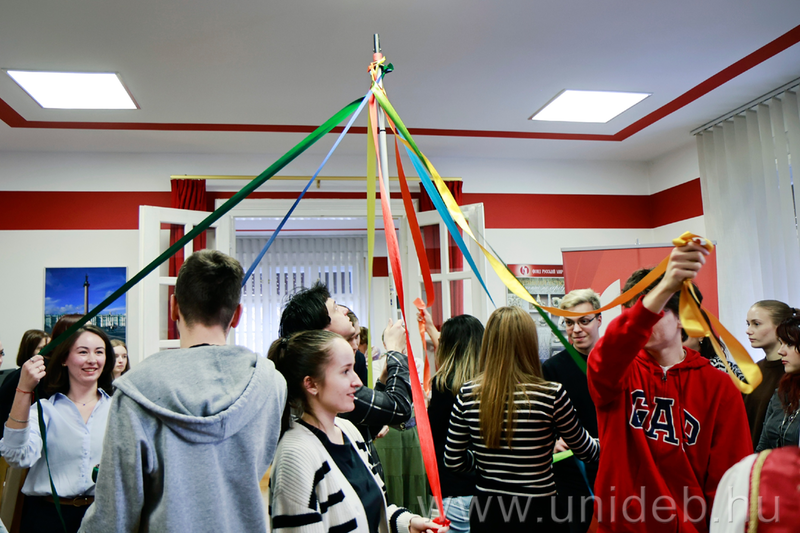
The University of Debrecen (DE) Faculty of Humanities (BTK) Institute of Slavistics, together with the Russian Cultural and Language Center, hosted high school students for an interactive event. Students from Debrecen, Miskolc, and Szolnok, accompanied by their teachers, who are studying the Russian language, had the opportunity to expand their knowledge through a playful competition, get to know the university, and finally celebrate Maslenitsa—the most famous Russian carnival tradition—together at the Russian Cultural and Language Center.
The Institute of Slavistics considers it a priority not only to teach the language but also to familiarize students and learners with the culture of the country whose language they study, even during their secondary education.
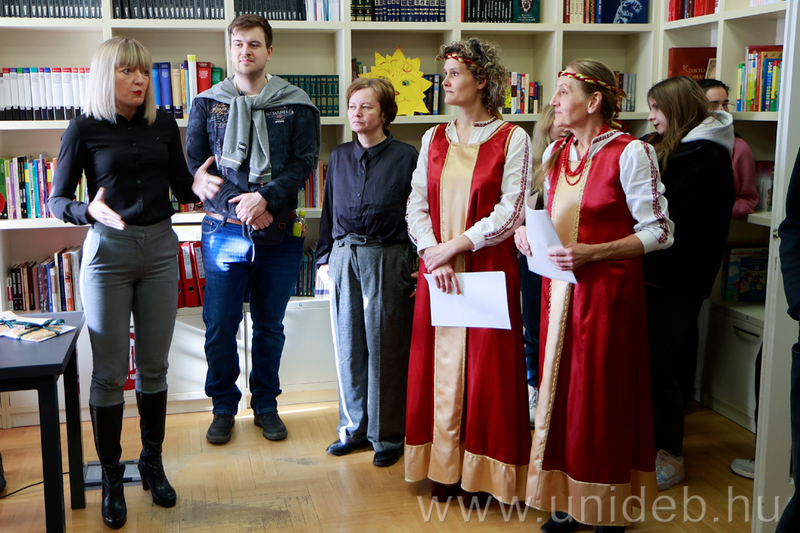
“This is exactly the purpose of today’s open day. Some of the students visiting us may have already decided to continue their studies at the University of Debrecen, while others may be inspired by today’s event to envision their higher education at the University of Debrecen, perhaps even in our Institute of Slavistics,” said Ildikó Regéczi, Director of the DE BTK Institute of Slavistics, in her opening address.
The program began in the institute’s library with a playful language competition. Three-member teams, consisting of both beginner and advanced students, encouraged cooperative learning and the exchange of experiences.
As part of the interactive day, the Maslenitsa celebration—hosted by the Russian Cultural and Language Center and organized jointly with the Institute of Slavistics—welcomed around 60 participants. Alongside high school students from Szolnok, Miskolc, and Debrecen, university students, lecturers, colleagues, and interested members of the public joined in the programs.
The afternoon started with a welcoming poem, followed by a presentation on Maslenitsa. This was accompanied by language and music sessions, song and dance lessons, and traditional folk games. Participants danced circle dances, practiced rhyming games, and tested their knowledge in cheerful competitions.
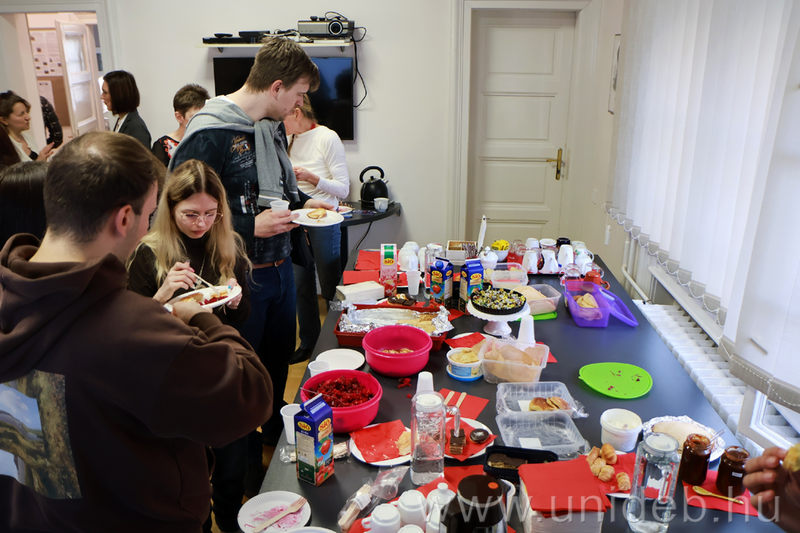
At the end of the program, quiz winners were announced and participants received gifts. The event concluded with a communal pancake-eating session and informal conversation.
“It is important that students not only develop their language skills but also acquire comprehensive knowledge about the cultural heritage, customs, and festive traditions of the countries they study. We firmly believe that language and culture complement each other, contributing to the acquisition of high-level professional knowledge,” said Éva Fórián, language instructor at the DE BTK Institute of Slavistics, in an interview with hirek.unideb.hu.
The Institute of Slavistics regularly organizes programs related to both Russian and Polish languages that showcase the folk and festive traditions of these countries.
(unideb.hu)