








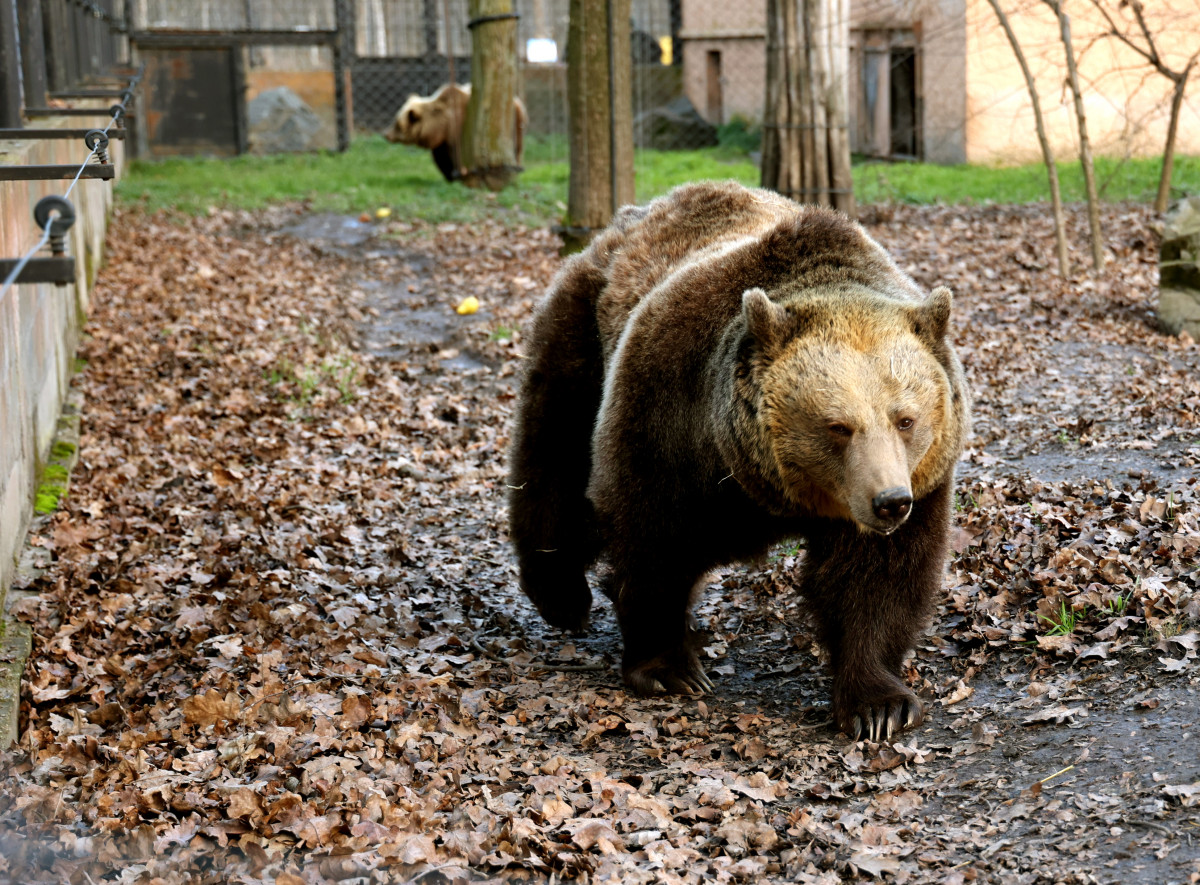
In recent years, sightings of bears and wolves have noticeably increased in our region, and it seems that misconceptions have been spreading just as quickly. Photos shared on social media, public reports, and sensational headlines often have a stronger impact on public opinion than professional assessments. That is precisely why communication based on accurate and verified information is especially important.
An article by WWF Hungary examines twelve common claims about large carnivores, relying on scientific evidence.
In recent months, several official and public observations have confirmed that the brown bear and the gray wolf are once again regularly present in certain areas of the Carpathian Basin. From an ecological perspective, this is part of a natural process, though it also triggers social reactions. The real question is not whether these species are present, but how well we understand their actual behavior and how much we rely on verified data when forming opinions.
Is the Danger Really Increasing?
One of the most common assumptions is that the return of large carnivores automatically means greater danger to humans. Professional data, however, show that direct attacks are extremely rare. Bears and wolves generally avoid people and do not seek encounters. The vast majority of conflict situations are linked to exceptional circumstances: a startled animal, a mother protecting her cubs, or individuals that have become accustomed to human food. Improper waste management, feeding wildlife, or inappropriate behavior in forests increases risk far more than the mere presence of these animals. The claims summarized by WWF highlight that the level of danger is not the same as the level of fear.
Misconceptions Around Farming and Livestock
Wolves are often believed to cause widespread damage to livestock. In reality, their primary food source remains wild ungulates in most cases. Attacks on domestic animals occur more frequently where preventive measures are lacking. In recent years, several countries – including those in the Carpathian Basin – have successfully applied measures such as electric fencing, nighttime enclosure of livestock, and the use of livestock guardian dogs. These methods not only reduce economic losses but also help mitigate conflicts. The WWF article emphasizes that coexistence is not a theoretical possibility but a working practice where prevention and information go hand in hand.
Their Ecological Role in Natural Balance
The presence of large carnivores is part of how ecosystems function. By regulating prey populations, they indirectly influence forest structure and biodiversity. Numerous international studies have confirmed these system-level effects. Public debate often focuses exclusively on direct conflicts, while overlooking the fact that the presence of natural predators can play a stabilizing role in the long term. The question, therefore, is not only whether we fear them, but whether we understand the role they play.
An increase in sightings does not necessarily mean a population boom. It may instead reflect growing public awareness and faster information flow. In the digital space, a single photo or post can reach thousands within minutes, amplifying emotional reactions. That is why it is crucial to consider how prominently credible professional sources appear in public discourse.
The compilation published by WWF Hungary encourages thinking based on verified data rather than assumptions. The presence of large carnivores is not a new phenomenon in the Carpathian Basin, nor is it solely a conservation issue. It is also a social, agricultural, and communication challenge.
Fear can be a natural reaction to the unfamiliar. Lasting solutions, however, are built not on exaggerated claims but on accurate information. Whether it is about hiking in the forest, keeping livestock, or shaping public opinion, our decisions are more sound when they are based on facts.
Bea Szöőr’s article can be found here in Hungarian.
Photo: Frank Yvette