







Sustainable construction is no longer just a buzzword—it has become an increasingly urgent economic and environmental challenge. The price of building materials continues to rise, while the sector’s ecological footprint remains significant. In this context, a material that has been with us for centuries is once again gaining attention: straw. What was once considered a simple agricultural by-product is now increasingly discussed as a building material of the future.
An Old Material with a New Role
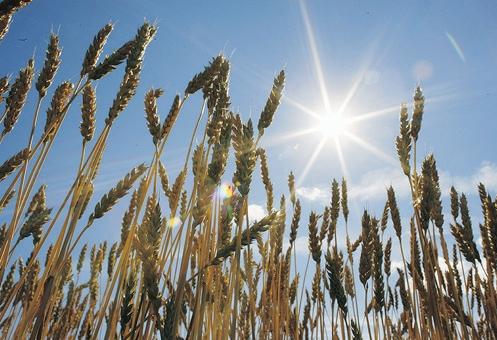
Researchers believe that with the right technological developments, one of agriculture’s most abundant by-products could become a serious alternative in the market for wall-building materials. Straw is a renewable resource available in nearly every grain-producing region, and processing it requires far less energy than producing conventional building materials. The question is not whether straw can be used for construction—history offers many examples—but how it can be implemented safely and on an industrial scale using modern technology.
Research at the Bauhaus University
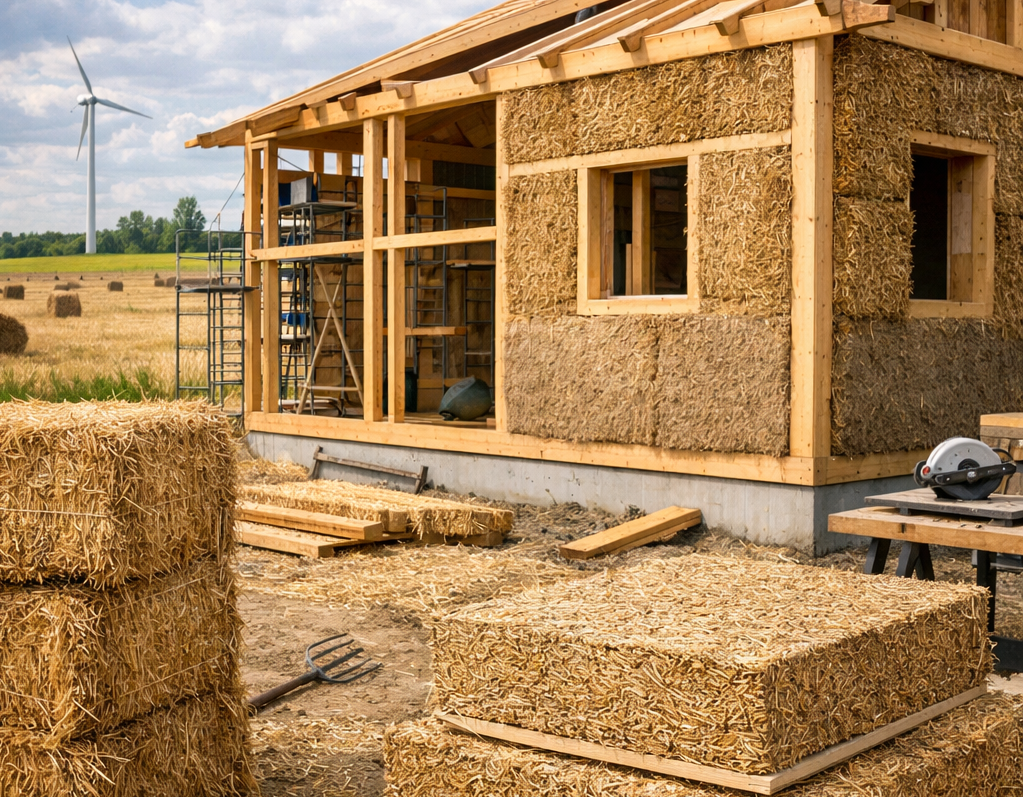
In Thuringia, Germany, researchers at the Faculty of Architecture and Urbanism of the Bauhaus-Universität Weimar are working on exactly this. Their goal is not only to use straw as an insulating material but also to create structural elements capable of bearing loads. The research focuses on compressed straw-based building elements that could be used in the walls of modern homes and public buildings. Developers point out that traditional brick and concrete construction faces increasing challenges: raw materials are becoming more expensive, energy demand is rising, and environmental impacts are raising concerns about current practices. Straw, on the other hand, is locally available, renewable, and requires relatively little energy to process.
Excellent Natural Insulation
One of the greatest advantages of straw construction is its favorable thermal performance. Studies show that straw-based wall elements can sometimes achieve better thermal transmittance values than many traditional structures. This means that houses built with such walls may operate more energy-efficiently. When examining the entire life cycle—from cultivation to construction and eventual demolition—the results are also promising. Straw processing requires less energy and places less strain on the environment.
There Are Limitations
At the same time, traditional straw-bale construction has its limitations. Thick walls can reduce usable floor space, which can be a disadvantage in modern architecture. The research group in Weimar is therefore working on solutions that produce slimmer structural elements while still maintaining sufficient load-bearing capacity.
Compressed Elements and Faster Construction
During development, researchers are testing various pressing technologies and layer structures. The aim is to increase the strength and rigidity of the structure while reducing the amount of material used. Binding and reinforcing materials are also integrated into the straw elements to improve their mechanical properties. As a result, the building components remain lightweight while becoming sufficiently durable.
Researchers are also examining the potential for prefabrication. Straw building elements produced under factory conditions could be assembled quickly and precisely on site. This could shorten construction times, reduce labor requirements, and lower costs.
Source: agrarheute.com
Author: Bea Szöőr
Article in Hunagarian can de found here.