







Bihardiószeg – just about 30 kilometers from Debrecen and 40 from Oradea – is a perfect destination for an autumn excursion. There are many reasons to visit, but let us stay with one for now: the “Padalja”.
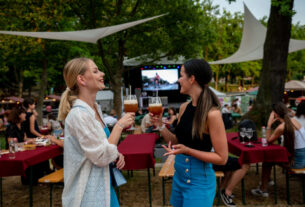
Yes, it’s not a typo – that is indeed the name of Bihardiószeg’s most famous row of wine cellars, “Padalja – Tessék-Sor”, located on the Kis-Jankai Hill. According to local elders, the name comes from an old anecdote: the winemakers working along the row would constantly invite each other into their cellars, where, thanks to the unending rounds of wine tasting, they soon ended up “under the table.” Whether true or not, this charming story has become an inseparable part of the Érmellék wine region.
A Historic Hungarian Wine Region
The Érmellék region once played an important role in local grape growing and winemaking. As part of the Partium area, it covers roughly 1,600 square kilometers, largely within the former counties of Bihar and Szilágy, though the actual wine-producing zone is smaller.
Today, grape cultivation and practical winemaking take place in Bihardiószeg, Székelyhíd, Szentjobb, Érmihályfalva, Érbogyoszló, Szalacs, Ottomány, Hegyközszentmiklós, Hegyközszentimre, and Hegyköztóttelek – the key villages of what can be regarded as the present-day Érmellék wine region.
Bakator
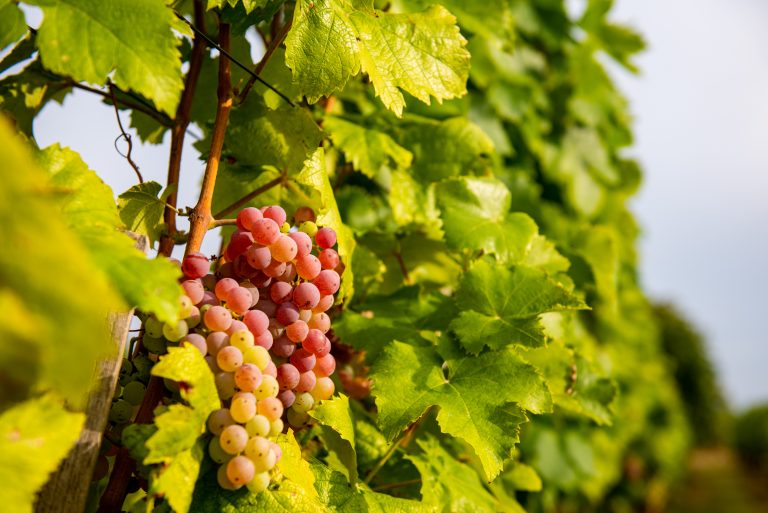
A wealth of Királyleányka grows here, along with Ottonel muscat and Olaszrizling, not to mention the abundant Chasselas, a juicy, high-yield variety easily blended with other wines. Among the old grape varieties, local winemakers are striving to make the red Bakator their flagship. In recent years, they have managed to plant enough cuttings to cover four or five hectares, ensuring the production of pure Bakator wine once again.
Did the Chinese Emperor Toast with Bakator?
The tragedy of Bakator is also the tragedy of Érmellék.
For centuries, this grape variety was the defining and leading vine of the region – a wine grape, table grape, and aromatic grape all in one. It matures slowly, but in years with ideal weather, it can produce legendary wines.
Under Count Ferenc Zichy, vintages such as 1811, 1827, 1834, 1848, 1852, 1862, 1864, and 1885 became famous. Occasionally, winemakers even produced a Bakator aszú wine, which in quality was considered second only to Tokaji Aszú.
In 1872, the Chinese Emperor ordered 200 bottles of Zichy’s Bakator Aszú – whether he actually toasted with it or not, we do not know, but what is certain is that Count Ferenc Zichy IX, a pioneer of modern winemaking, drew attention to Érmellék, and thus to Diószeg, with several Bakator vintages at the 1873 Vienna World’s Fair.
In the town itself stands the Zichy Mansion, a neoclassical building that, after a long and eventful history, is currently being restored. It now functions as both a library and a museum.
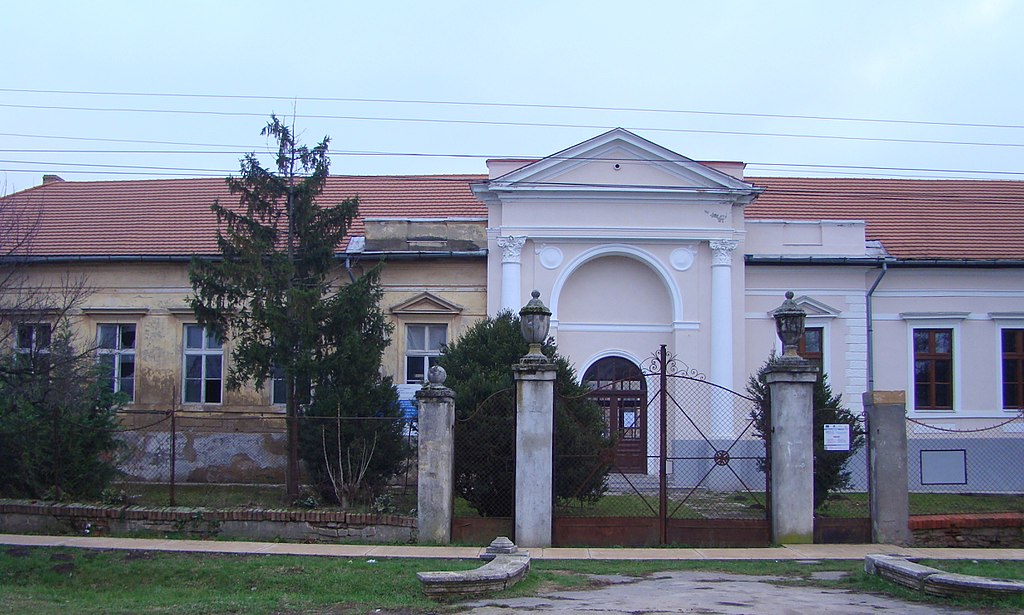
Photo: wikipedia.org
Phylloxera, Direct Producers, and Disorganization
In 1885, phylloxera reached Diószeg from Nagykágya. From 1894 onward, American vine nurseries were established in Margitta, Jankafalva, Örvénd, and Nagykágya, where growers learned how to graft noble scions onto resistant rootstocks.
Despite the phylloxera plague and the mass spread of direct-producing varieties, Bakator survived in the region until the mid-20th century. Its disappearance was mainly due to the disorganization of vine growers and the lack of protection for both the variety and their professional interests.
Later came collectivization, and with it, the aging and migration of those who had the skill and passion for viticulture. From 1950, the authorities effectively wiped Bakator from the Lower Érmellék, allowing it to survive only in the Upper Érmellék as a tolerated variety.
Thanks to the initiative of Lóránd Heit and the intellectual and professional support of Imre Kaló, a winemaker from Szomolya, the rediscovery and re-cultivation of the Érmellék Bakator variety began on September 8, 2011. After the collection of “red Bakator propagators” in Avasújváros on February 24, 2012, the first steps toward the revival of the variety in Bihardiószeg were taken in the spring of 2013.
The Bakator Alliance
On May 26, 2017, five winemakers from across the Carpathian Basin founded the Bakator Alliance in a remarkable act of cooperation.
In their joint declaration, Oszkár Maurer (Hajdújárás), Zoltán Málik (Badacsony), István Bencze Jr. (Hegymagas), István Bartos (Avasújváros), and Lóránd Heit (Bihardiószeg) pledged to coordinate their efforts to revive and promote the Bakator grape and other ancient Hungarian varieties.
Later, László Andrási (Somló Hill) joined in autumn 2017, followed by Krisztián Sass (Kígyós, Transcarpathia) in May 2018.
Heit Cultural Cellar
If all this inspires anyone to delve deeper into the origins of the Padalja name, it’s well worth making a stop in Bihardiószeg—whether as a standalone destination or as part of a trip to Oradea.
Wineries
-
Heit Cultural Cellar
-
Yanka Winery
-
Daróczi Cellar
-
József Szőnyi’s Cellar
-
Gábor and István Tolnay’s Cellar
Translated from the Hungarian article by Bea Szöőr. The original Hungarian version can be read on Debreceni Nap.
Cover photo: heit.hu
Wildcat genes in domestic cats – Could our cat also carry wildcat genes?