








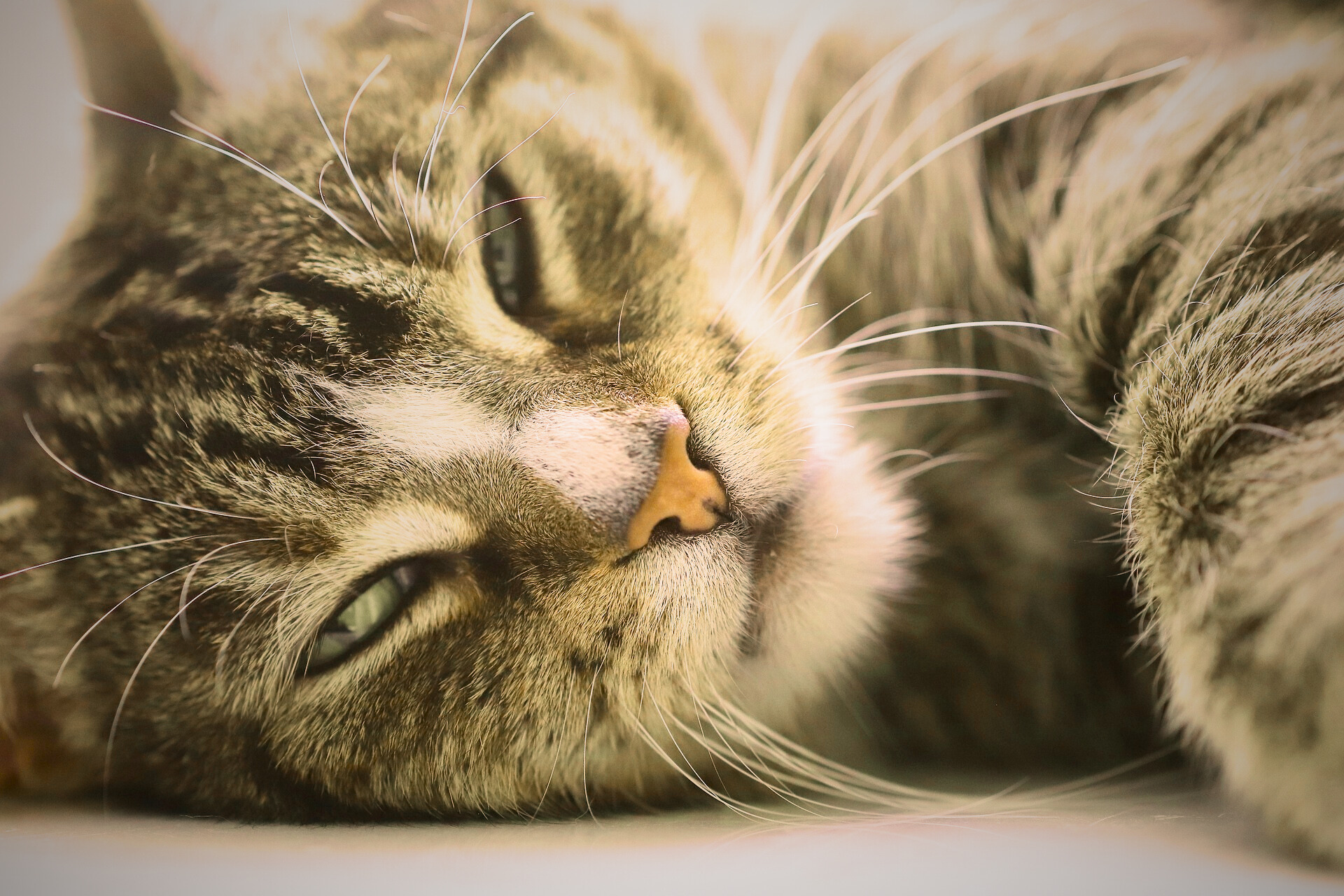
Cirmike is a perfectly normal cat, but somehow… different. This thought may have crossed our minds while observing our cat during eating, playing, or interacting with other cats. So if Cirmike is not the typical, average cat but inexplicably different from the neighbor’s Zserbó, it is possible that our pet carries wildcat genes.
In their latest study, the Department of Ethology at Eötvös Loránd University (ELTE) and the HUN-REN Balaton Limnological Research Institute are investigating how widespread wildcat traits (genes) are in the domestic cat population in Hungary. Protecting wildcats is a key task in Europe, including Hungary. In addition to the usual threats—loss of habitat, road accidents—wildcats face another danger: hybridization with their domesticated relatives. In rural areas, especially small settlements, most owned cats roam freely, and there are also many feral cats across the country. It is therefore not surprising that a significant proportion of wildcats are already “mixed-blood,” i.e., wildcat-domestic cat hybrids.
While the “wildcat side of the coin” has been studied for decades, surprisingly, no research has yet investigated whether cat hybridization could occur in only one direction.
If the “forest-edge romance” results in a domestic cat mother and a wildcat father, it is highly likely that the mother will give birth to hybrid kittens in the owner’s environment. Thus, the hybrids arrive at their owners with a domestic cat “identity.” In their recent publication, ELTE ethology researchers, led by Péter Pongrácz with students Csenge Lugosi and Petra Anett Kovács, along with experts from the Balaton Limnological Research Institute, examined whether hybrid-looking cats—and especially those exhibiting behavior markedly different from the norm—can be observed in the Hungarian domestic cat population. Over 700 Hungarian cat owners completed the questionnaire, describing their pets’ behavior and appearance—and more than 400 cats were also submitted with photos. Ethologists evaluated these using the appearance scoring system developed by Scottish wildcat researchers to determine how “wildcat-like” they were.
Tail-raised greeting reserved for humans, not fellow cats
The researchers are now investigating whether wildcat genetic traces can be observed among Hungarian cats and how these affect behavior. The results are surprising: up to 20% of domestic cats show hybrid traits, which manifest not only in their appearance but also in their behavior. For example, highly hybrid-like cats appeared more independent of their owners and were notably less likely to perform the “tail-raised” greeting seen in other cats. However, this gesture was observed toward humans. Interestingly, when cats were simply classified as “tabby – non-tabby,” tabby cats also showed “wilder” tendencies: except for their owner, they were less friendly toward other people, roamed more, and defended their food more aggressively than non-tabby cats. Importantly, the care and living conditions of hybrid-like domestic cats did not differ from typical domestic cats. Their homes could be anywhere, not only in settlements near European wildcat habitats.
DNA analysis ongoing
As DNA analysis is still in progress, it is not yet known whether these hybrid-looking and behaviorally distinct cats truly carry wildcat genes. However, signs point in that direction. The absence of the tail-raised greeting is particularly interesting in wildcat-looking cats. This behavior is considered a domestication trait, as wildcats show it only toward their mother during kittenhood. In domestic cats, friendly approaches are typical even in adulthood, whether toward another cat, a human, or even a dog.
Owners encouraged to participate
The first results of the new Hungarian ethology study mean we can now look at unusually behaving tabbies with fresh eyes. The research is ongoing, and further results are expected that will help us better understand our pets’ genes and behavior. Experts welcome and encourage adventurous cat owners to fill out their questionnaire. For us, the benefit—beyond supporting scientific progress—is that a long-standing misunderstanding about our pets may finally be clarified.
Source: https://ethology.elte.hu
– Translated from the article by Bea Szöőr –