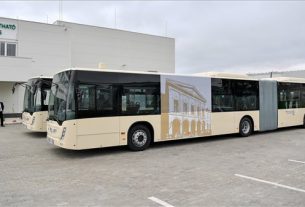









There are plenty of problems with public transportation in Debrecen — and it’s not just passengers who think so. A public discussion held at the Malter community space was prompted by the city’s Sustainable Urban Mobility Plan (SUMP), completed in 2023.
Transportation expert András Ekés from Mobilissimus Ltd. and Zoltán Jónás, president of DERKE, discussed what the document’s often technocratic vision actually means in practice, and how well it aligns with the everyday reality of getting around Debrecen.
A Growing City, Even Denser Car Traffic
Debrecen is facing significant growth in the coming years. The city’s population could increase by as much as 25 percent, mainly due to the expansion of the university and large industrial investments. At the same time, rising housing costs are pushing more people into surrounding settlements, from where they commute daily — mostly by car — further increasing traffic.
According to the SUMP’s projections, by the end of the decade there will be nearly one private car for every two residents. Traveling by car is often faster and more predictable than using public transport. Debrecen’s urban structure further aggravates the situation: through-traffic cuts across the city, there are few park-and-ride facilities, railway lines divide neighborhoods, and level crossings frequently block traffic.
In theory, rail transport could serve as an alternative, but in practice there are too few services, and stations are poorly connected to local transport. As a result, the city relies heavily on buses, which often sit in traffic jams, with stops located far apart and inconveniently.
Strategy on Paper, Chaos in Everyday Use
While strategic documents offer a fairly accurate diagnosis of the problems, in practice they are often little more than obligatory paperwork required to access funding. Data alone is meaningless if it is not followed by real investments. Long-term proposals are frequently overridden by short-term political considerations, leading to flashy but isolated projects instead of system-wide development.
For everyday passengers, this results in chaotic timetables, infrequent services, and departures that are hard to follow. Transfers are slow, connections poorly coordinated, and public transport fails to become a genuine alternative to car use. The solution is not more vehicles, but a regular, hierarchical network with predictable departures and real transfer hubs — as seen in cities like Bern, where seventy to eighty trains pass through a single station every hour with minimal delays.
Public Transport Is a Public Service
In Debrecen, service levels are low: tram lines are slow, the bus network is sparse, and coverage is limited. As a result, residents do not experience public transport as part of their everyday lives. Because few people use it, the city does not see it as a worthwhile investment, so services fail to improve — reinforcing car dependency in a vicious cycle.
Public transport is not a market product, but a public service. Ticket revenues often cover only a quarter of operating costs, with the remainder requiring public subsidies. The real question is whether the system can offer a high-quality alternative to driving.
Not Free — but Good
Pricing and financing are also critical issues. Public transport should not be free, experts argue, but it should be good enough that people choose it willingly — not just because it is cheap. If passengers had to cover the full cost, ticket prices in Debrecen would be unrealistically high. What is needed instead is stable and predictable funding.
Small changes, such as the introduction of one-hour tickets, represent real quality improvements for occasional users. The value of a ticket is always relative: it depends not only on price, but also on network density and service quality — areas where Debrecen lags well behind other large cities.
Risk Aversion and Short-Term Thinking
Urban transport development in Debrecen is often excessively risk-averse. New services are held back by the fear that “what if it works and then we have to maintain it?” This has affected initiatives such as night buses and demand-responsive transport models. A similar story played out with Bus 42, which was split in two to improve punctuality. While the statistics improved, passengers faced more transfers and longer travel times, and ridership declined — yet the project was still labeled a success.
Car-Dominated Urban Spaces
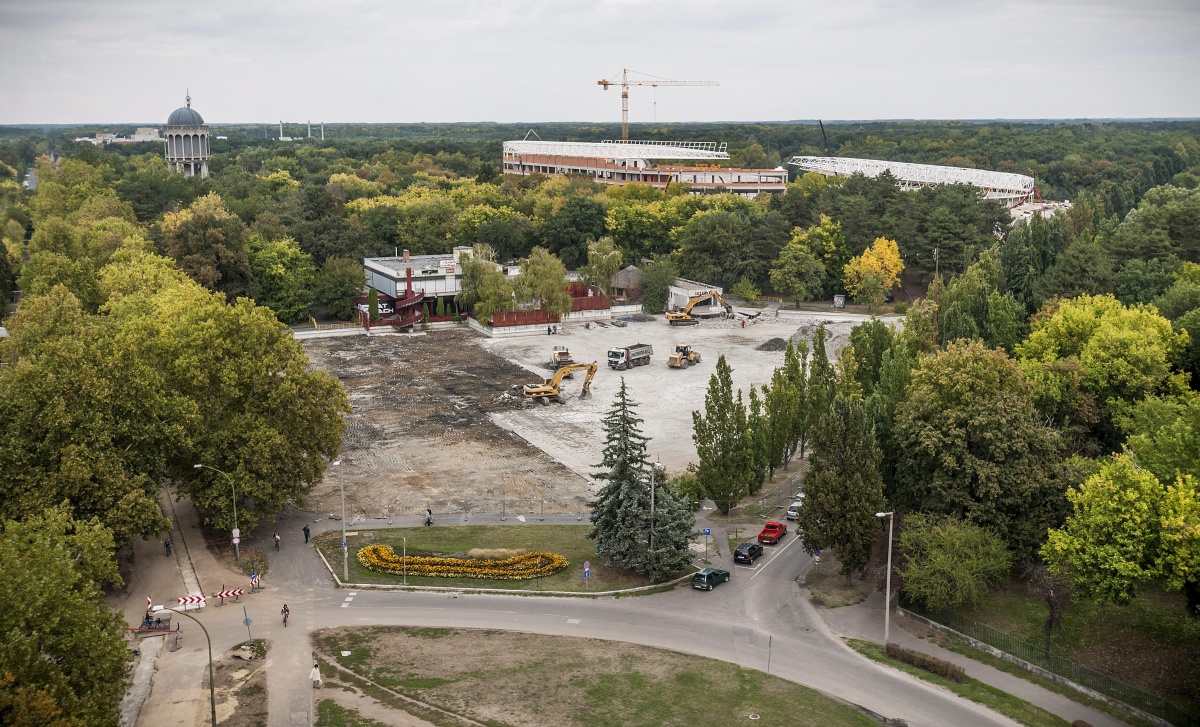
Car-centered public spaces pose another major problem. Árpád Square illustrates how prioritizing traffic flow and parking can create an unlivable, polluted environment. The theoretical solution is simple: redistribute public space, reduce car traffic, and create more pedestrian- and cyclist-friendly areas.
Ljubljana shows that with political courage and public engagement, traffic calming can be successful. City centers become more livable, and local businesses often support these changes once the benefits become clear.
Trams, Bicycles, and Missed Opportunities
Debrecen’s tram system is not a true network, but merely two loosely connected lines. The planned Line 3 is a partial development that offers no real improvement, running parallel to existing bus routes without providing a clear advantage. Trolleybuses operating alongside buses are similarly inefficient, despite technological options that could make the system more flexible.
Although bicycle infrastructure exists in terms of length, it often lacks quality. Many routes run along sidewalks, creating conflicts, and the network rarely reflects actual user needs. The lack of community planning and civic involvement only worsens the situation. Shared bike and scooter systems are virtually nonexistent, despite clear demand in a university city.
Examples from other cities — such as Szeged and Oradea — demonstrate that integrated, network-based solutions like tram-train systems can work. In Debrecen, however, the absence of long-term strategic thinking has stalled meaningful progress for decades. As a result, partial projects like the third tram line remain visually impressive but largely ineffective without comprehensive system modernization.
Are you dissatisfied with public transport in Debrecen too?
According to experts, the problem isn’t you — it’s the system.
Trolleybus breaks down in Debrecen, passengers had to push the vehicle