







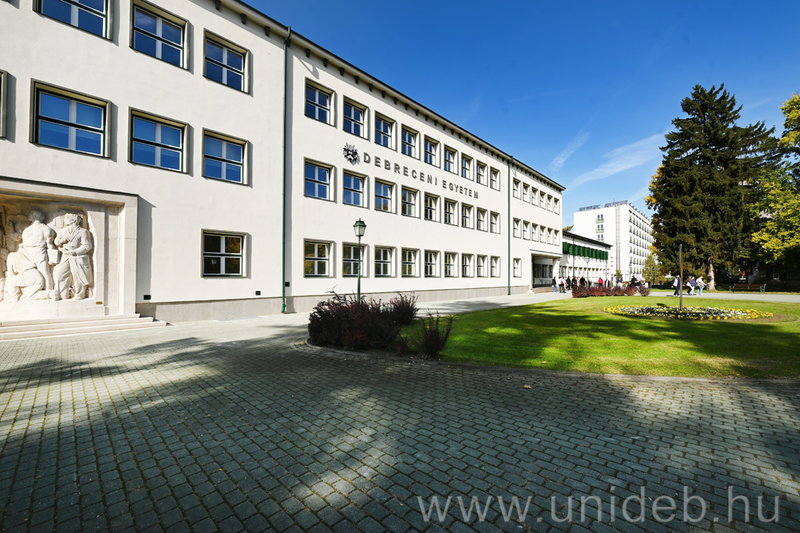
The renovation of the buildings housing the Faculty of Agriculture and Food Science and Environmental Management, the Agricultural Research Institutes and Experimental Farm, as well as the Faculty of Economics, aimed to meet climate-related requirements and achieve energy-efficient and cost-effective operation. Renovating Buildings “A” and “B” is expected to reduce energy consumption by approximately 30–60 percent.
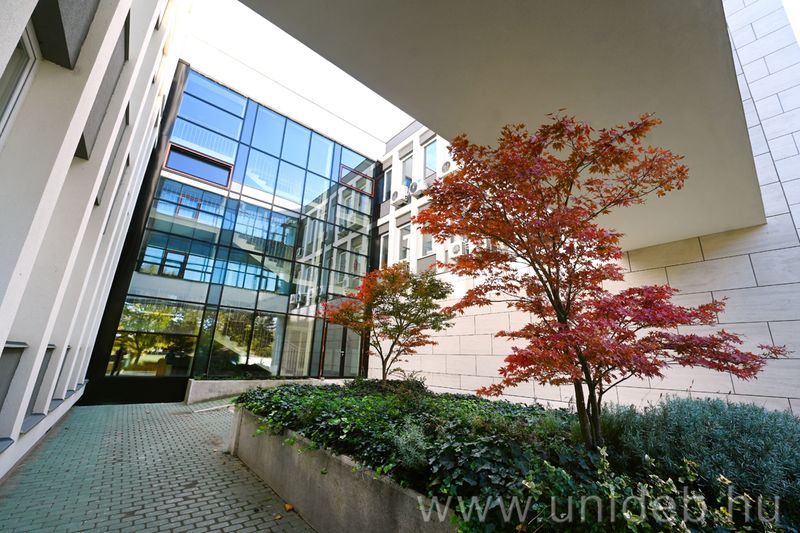
During the modernization, experts insulated and applied new high-quality plaster to nearly 6,400 square meters of exterior surfaces on Buildings “A” and “B” and the connecting glass corridor. More than 700 doors and windows were replaced or refurbished, including wooden, plastic, and steel doors and windows. Additionally, nearly 700 square meters of curtain walls were installed, and window sills and sheet coverings were renewed. Walkways, staircases, light wells, and railings connected to the buildings were also upgraded. During the reconstruction, which began in April 2024, the attic of Building “A” was insulated, and both buildings had their precast concrete eaves, plinths, and window frames renovated over approximately 850 square meters.
Zoltán Bács, Chancellor of the University of Debrecen, told hirek.unideb.hu that the central building of the Böszörményi Street campus is subject to heavy use, as it is currently used not only by the Faculty of Agriculture but also by the largest Faculty of Economics and the Agricultural Research Institutes.
“The renovation was long overdue. In addition to meeting climate-related requirements, the aim was to achieve energy-efficient and cost-effective operation. The modernization will also have a positive effect on utility costs, as energy savings of 30–60 percent are expected thanks to the new technologies,” added the university leader.
The energy modernization of Buildings “A” and “B” at the Böszörményi Street campus was implemented as part of the 5.5 billion HUF project titled ‘Infrastructure and skills development for practice-oriented higher education at the University of Debrecen’ (RRF-2.1.2-21-2022-00003), supported by the European Union’s Recovery and Resilience Facility.
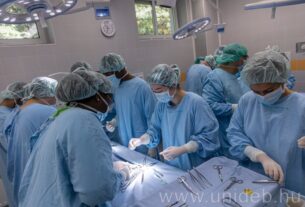
For the renovation of Buildings “A” and “B,” the University of Debrecen allocated 1 billion HUF from the RRF grant, with 100 percent funding. Previously, this grant also financed developments enabling robotic surgery procedures and education.
(unideb.hu)