







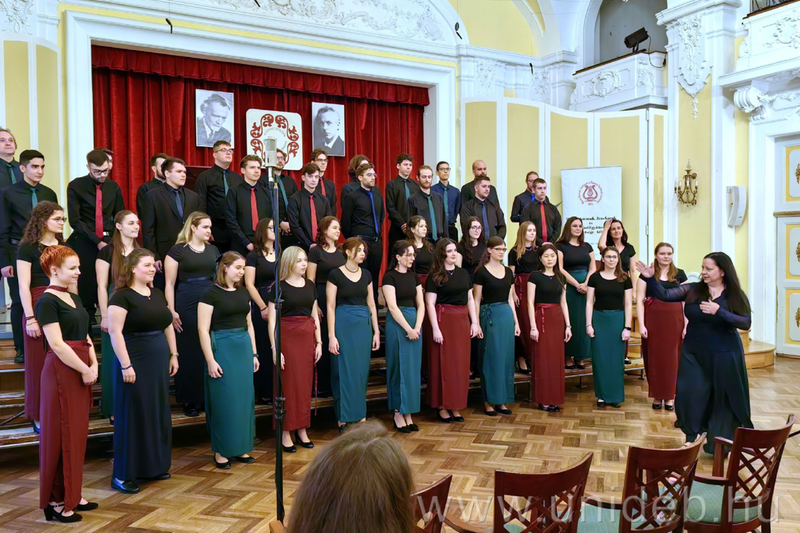
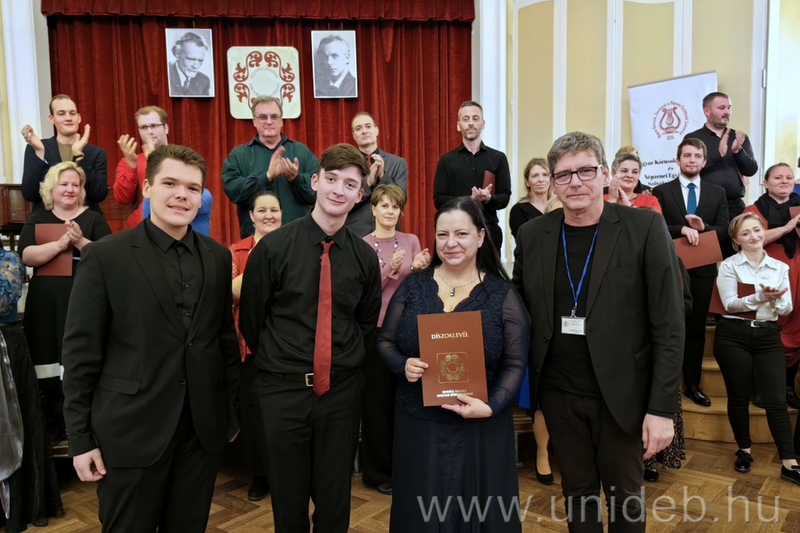
The Mixed Choir of the University of Debrecen’s Faculty of Music performed exceptionally at the 10th Zoltán Kodály Hungarian Choir Competition. Their performance earned them a gold diploma as the winner of their category, as judged by the competition’s expert panel.
The jubilee competition drew choirs from across Hungary and beyond the borders, with a record number of ensembles participating in various formations and age groups. In total, 49 choirs took part—29 children and youth choirs and 20 adult choirs—creating an unmistakable sense of community for both competitors and the audience at the ceremonial hall of the Cistercian St. Imre High School in Buda. The competition focused on modern choral works, highlighting the performance and promotion of 20th and 21st-century compositions. Held every three years, the event is recognized for its high standards.
At the country’s highest-level national choral competition, eight choirs competed for the Grand Prize, including the Mixed Choir of the University of Debrecen. Monika Végh, head of the non-independent Choral Conducting Department and conductor of the choir, told hirek.unideb.hu: “It was an honor to participate in this prestigious national competition, where the best Hungarian choirs showcased their talents. It is especially gratifying that the students of the University of Debrecen were successful in such a highly competitive field.
“Singing in a choir is one of the most powerful artistic community experiences, and competing at such an event is always a great challenge, as the cream of the profession is present. Preparing for the competition was exciting, as the stakes were high. It is a remarkable achievement to be among the best out of nearly fifty choirs. The students were deeply committed during the preparation and throughout the competition. Our performances were memorable and heartfelt, with the choir’s determination clearly evident. Many praised the young singers both musically and professionally. These experiences will have long-term benefits for their professional development, providing immersive, community-centered experiences and also strengthening their preparation for an upcoming competition in Italy. Our preparation was further supported by six concerts performed as part of the youth series Hang-Játék-Zene, organized by Judit Váradi, head of the Faculty’s artistic management office, which provided significant stage experience. At the competition, the young singers performed beautifully and in unison.”
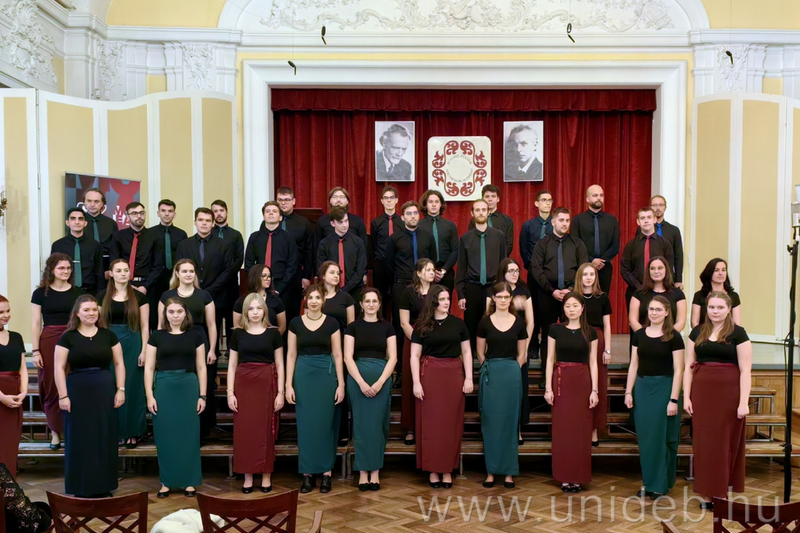
Végh Monika added that the choir’s repertoire included works by Kodály and other Hungarian composers, showcasing their versatility. Highlights included Kodály’s Békesség óhajtás, Gabriel Fauré’s Madrigal, Miklós Kocsár’s Mégis mondom, Damion, Tamás Kálmán’s Duna medley, Aurél Tillai’s Lauda Sion, and Tamás Daróci Bárdos’ A pünkösdi rózsa.
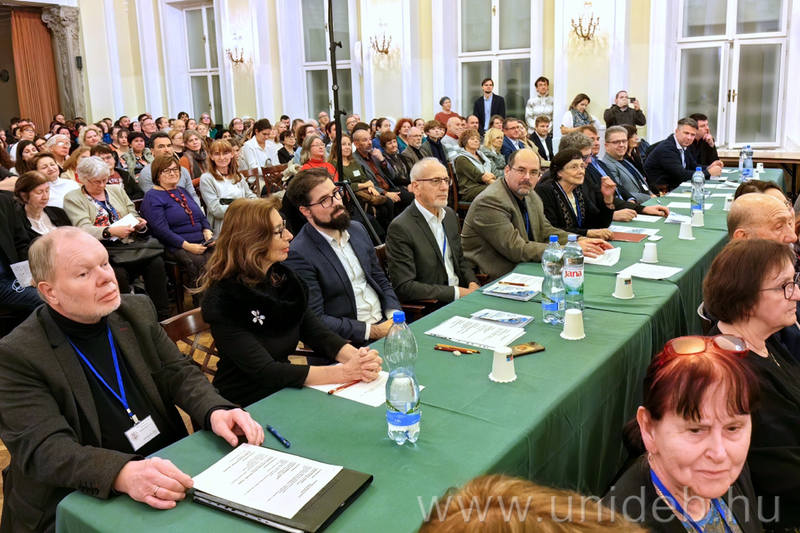
The performances were evaluated by a prestigious professional jury, including Boldizsár Kiss, instructor at the Kodály Institute of the Liszt Academy of Music; Zoltán Kocsis-Holper, chief conductor of the Kodály Choir and president of the KÓTA Artistic Committee; Gellért Lőfi, music teacher and leader of the Laudate Chamber Choir and Campanella Children’s Choir; Györgyi Rápli, music educator and conductor; Bence Kutrik, two-time Artisjus award-winning composer, pianist, and president of the Hungarian Composers’ Association; Ákos Somogyváry, conductor and founding artistic director of the Caritas Collectio Chamber Orchestra; and István Stubendek, chief conductor of the Concordia Mixed Choir.
The Grand Prize of the competition, organized by the Hungarian Association of Choirs, Orchestras, and Folk Music Ensembles (KÓTA), was ultimately awarded to the Cantemus Youth Mixed Choir from Nyíregyháza.
(hirek.unideb.hu)