








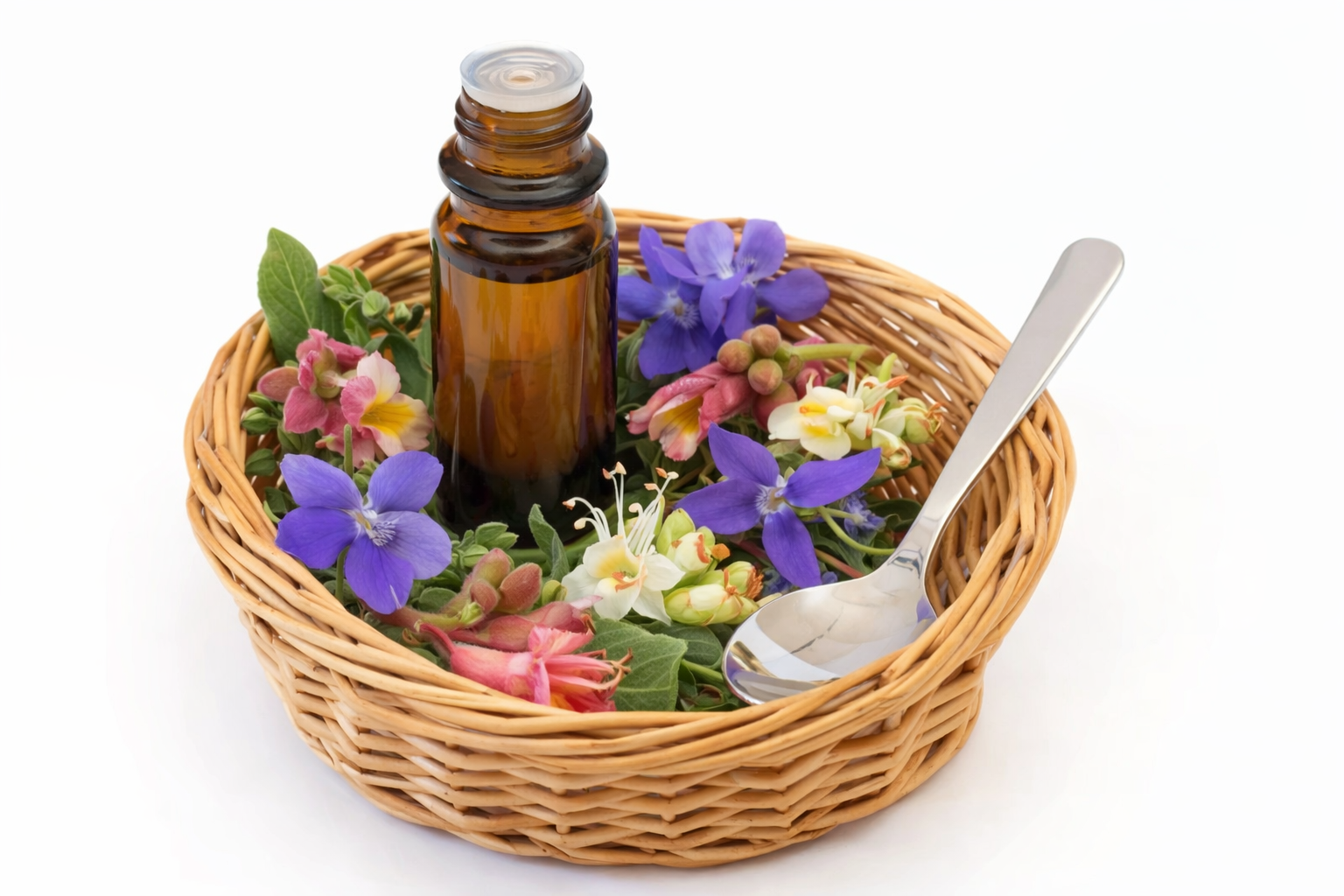
In recent weeks, persistently foggy and overcast weather has defined everyday life, and winter has returned—if only temporarily. The lack of sunlight, the feeling of confinement, and reduced activity can lead to low mood, decreased motivation, or increased tension for many people. During such periods, more people turn to Bach flower essences, which have long been present in complementary and alternative health practices. Although their mechanism of action has not been clearly confirmed by scientific studies, their use is widespread internationally.
The method was developed by Edward Bach in the first half of the 20th century. His basic assumption was that persistent negative emotional patterns may contribute to the development of physical complaints, so the focus of intervention lies on the current emotional state. The system consists of 38 essences: 37 plant extracts and one prepared from spring water (Rock Water), each associated with a specific emotional pattern.
Typical emotional reactions in gloomy weather
Prolonged periods without sunlight are often accompanied by low spirits, passivity, or irritability. The Bach system categorizes emotional states into groups such as fear, uncertainty, lack of interest, loneliness, oversensitivity, and despair.
Some commonly occurring states include:
-
Easily discouraged, pessimistic: Gentian is recommended for those who lose momentum even after minor setbacks.
-
Lack of motivation, apathy: Wild Rose comes to the forefront when someone resigns themselves to unfavorable circumstances.
-
Dissatisfaction with oneself: Crab Apple is used in cases of excessive self-criticism.
-
Vague anxiety: Aspen is associated with fears that seem to arise without a clear cause.
Selection is always based on the dominant emotional reaction at the given time; the weather itself does not determine the choice.
Application and practical considerations
Choosing essences is based on self-observation. It is worth clarifying whether the issue is a temporary mood fluctuation or a more persistent emotional pattern. Typically, no more than 5–7 essences are combined at once. The mixture is diluted with water and often preserved with a small amount of alcohol. The usual dosage is a few drops taken several times a day. In cases of acute stress, the so-called Rescue Remedy—a combination of several essences—may be used. The duration of application varies individually, generally ranging from a few weeks to several months, depending on how long the emotional state persists.
Professional considerations
Bach flower therapy is a complementary method. It does not replace medical treatment or psychotherapy. In cases of persistent depressive symptoms, severe anxiety, or other mental health disorders, professional support is recommended. The method’s advantages include ease of use and good tolerability. However, it is important to emphasize that its effects are not based on conventional pharmaceutical mechanisms but aim to support emotional balance.
And if none of this feels convincing, surprise yourself with a bouquet of flowers—tulips or daffodils—which, with their scent and colors, can surely bring spring into your home until it truly arrives.
Bea Szöőr’s article can be found here in Hungarian.