









Due to the significant warming in the weather at the end of January and the beginning of February, snowdrops and winter aconites have begun to bloom in the Botanical Garden of the University of Debrecen. The small white and yellow flowers are blossoming in several parts of the park. If there is no drastic change in the weather, visitors are expected to be able to admire these lovely little plants for about two more weeks.
Snowdrops usually appear at the end of winter, when the soil is no longer frozen but most plants are still dormant. In the Botanical Garden of the University of Debrecen, not only the native and protected common snowdrop of Hungary is in bloom these days, but also the larger giant snowdrop, often planted in gardens, as well as the less common broad-leaved snowdrop with shiny, bright green leaves. The pleated snowdrop can also be found here, although it has not yet appeared this year.
“These plants lie almost ready to leap beneath the leaf litter, waiting for a milder period with daytime temperatures around 10 degrees Celsius, and then they develop very quickly and burst into bloom. The mild weather is bringing more and more flowers into blossom,” the director of the facility told hirek.unideb.hu.
Attila Takács added that unfortunately the natural habitats of the protected common snowdrop have declined across the country in recent decades, but fortunately the species is not threatened with extinction. Larger natural populations can still be found in fresh, open woodlands, in hilly and mountainous regions, and in certain parts of the Great Hungarian Plain. In the university’s Botanical Garden, several thousand specimens of the four snowdrop species grow scattered throughout the area.
Climate change is responsible for the fact that while a few decades ago snowdrops would begin flowering almost on schedule at the end of winter, nowadays this often starts in mid-winter.
“The winter aconite, originally native to the Mediterranean regions of Europe, was probably introduced to Hungary in the 17th–18th centuries in aristocratic parks and monastery gardens, from where it spread into the wild. It has been protected in Hungary since 1982. The Botanical Garden is home to several thousand specimens of this plant as well. Their flowering began earlier than that of the snowdrops this year; the first blooms were already visible at the end of January,” said Attila Takács.
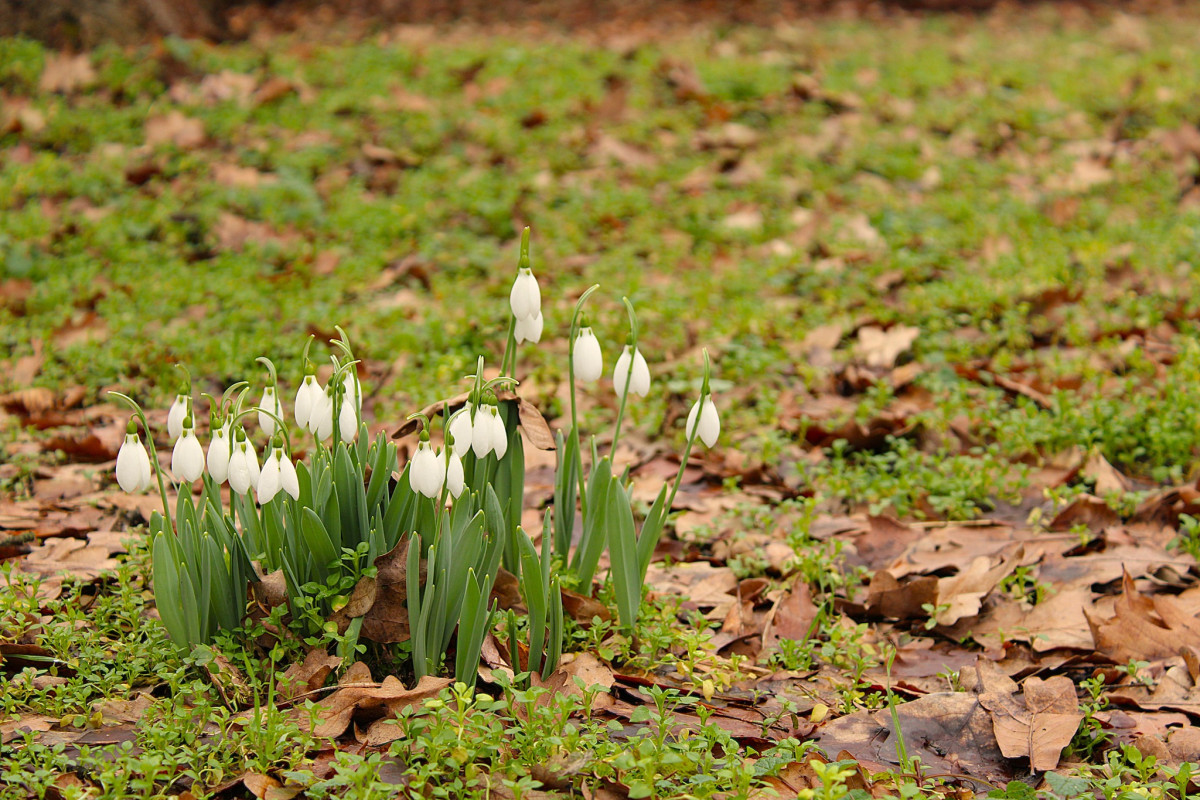
The garden’s director emphasized that if the weather remains as mild as it is now, visitors will be able to enjoy the small flowers until the end of February or the beginning of March. The plants are at their most beautiful in sunny weather, when their blossoms open fully.
However, snowdrops and winter aconites are not the only reasons to visit the garden at this time of year: in the arboretum, visitors can also admire the blooming hellebores and hazel, while in the greenhouses palms, orchids, bromeliads, cacti, and other succulents provide a spectacular sight all year round.
Further information about the Botanical Garden, which is open every day from 8 a.m. to 4 p.m., can be found here.
— UD Press Centre —
Photo: UD Botanical Garden