






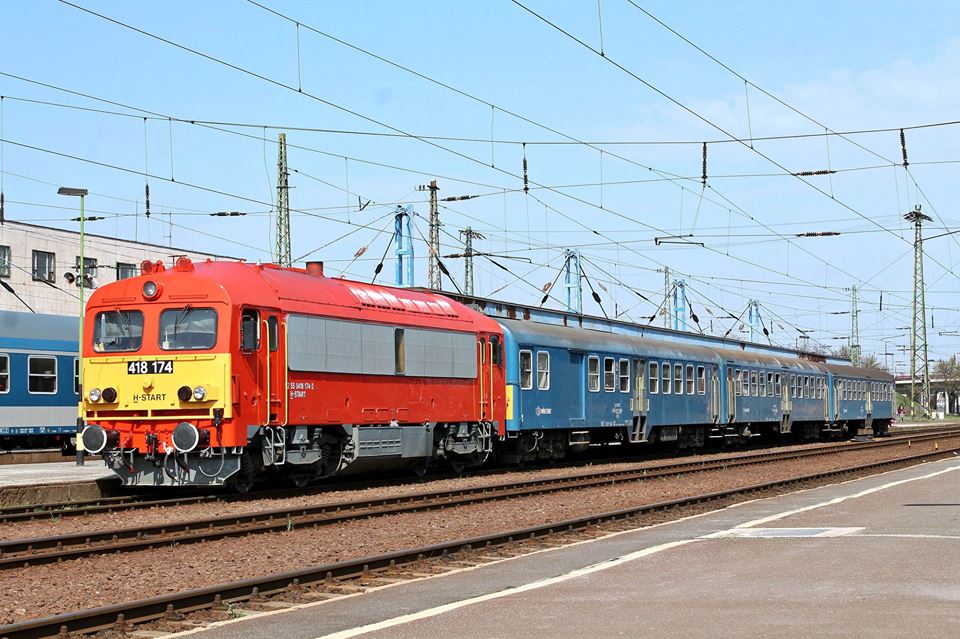
The second phase of the development of the railway line between Debrecen and Balmazújváros has begun, the Ministry of Construction and Transport (ÉKM) announced on Monday.
The goal of the infrastructure development project, which is connected to the Debrecen Northwest Economic Zone, is to modernize and electrify the railway section, with particular focus on upgrading the track between Macs station and Balmazújváros to support speeds of up to 100 km/h. The project also includes the complete renewal of signaling systems, passenger information systems, and energy supply infrastructure. According to the plans, the project is set to be completed by May 2026.
According to the statement, with the help of net HUF 38 billion in European Union funding, new railway stops will be established within Debrecen’s city limits at Derék Street and in the Western Industrial Park, while Balmazújváros station will be expanded with an operations building and a park-and-ride (P+R) facility.
The railway bridge over the Eastern Main Canal will be renewed, an electric overhead line system will be built, the region’s telecommunications network will be upgraded, and a new remote control center will be established in the Macs Industrial Park. The investment aligns closely with the objectives of the IKOP Plus program, especially its first priority, which aims to strengthen clean urban and suburban transportation.
They also added that the project supports metropolitan suburban railway development, enhances the efficient integration of transport chains beyond the borders of Budapest, increases the safety of urban rail transport, and reduces particulate matter and nitrogen oxide emissions in public transport.
The initiative also fits into the goals of the National Transport Infrastructure Development Strategy, adopted by the government in Resolution 1486/2014 (VIII.28) on August 28, 2014, which defines Hungary’s transport development directions in the long term—from 2014 through to 2050, the statement added.