






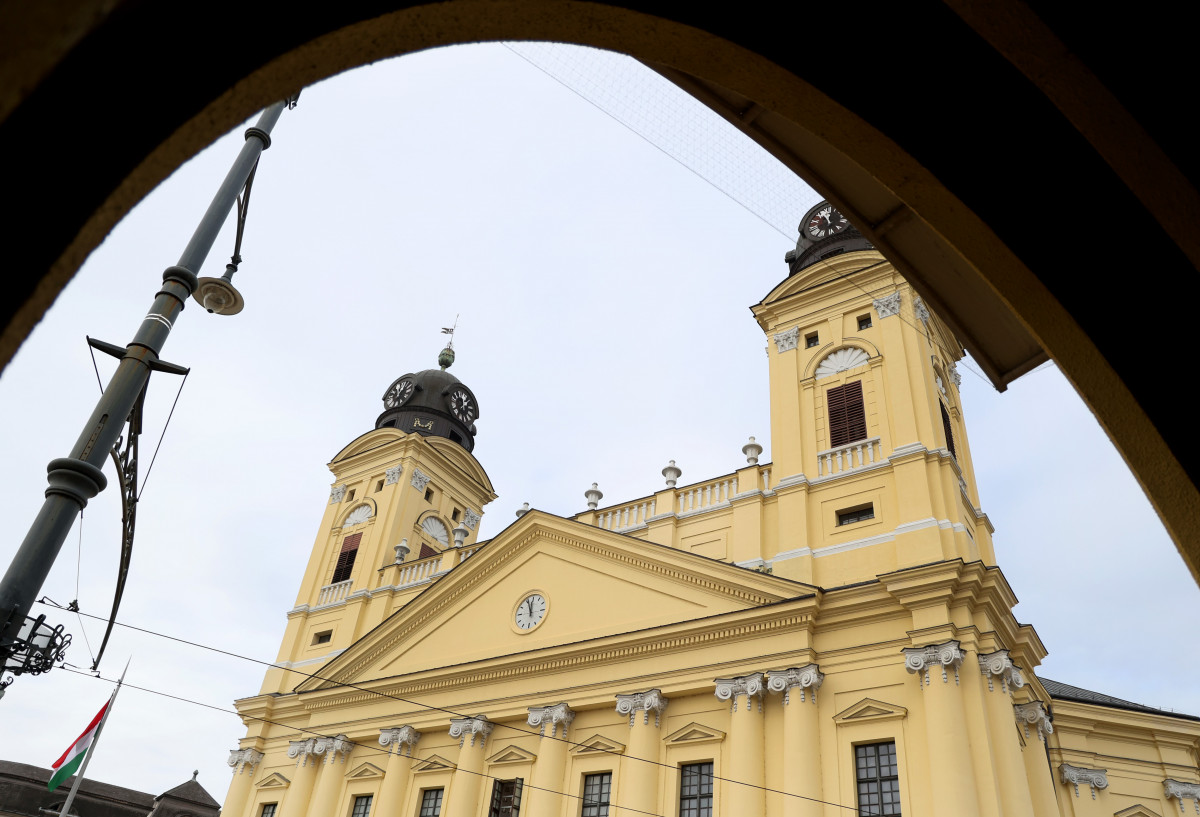
Today, the tower clock of the Reformed Great Church of Debrecen is operated by a modern, GPS-controlled digital mechanism, but its nearly 100-year-old mechanical clockwork had been resting in the attic as a museum piece since 2014. On the occasion of Tourism Day – thanks to the cooperation of the city and active involvement of local civil groups – this special feat of precision engineering was brought back to life on September 25, 2025.
Before the mechanism was restarted, Mayor László Papp emphasized that no matter how fast development and change may be in the city, and no matter how much Debrecen advances in exploiting the opportunities of the 21st century, traditions, history, and the city’s past remain extremely important to everyone. He noted that the mechanism also symbolizes the good cooperation between the city and the churches, since the tower clocks of five churches in Debrecen were once regulated from City Hall thanks to a precision pendulum system. This too, he said, was a sign of the connection between the city and the churches.
The mayor recalled that the mechanism was dismantled in 1980, but thanks to the joint efforts of the Great Church and the Small Church, it has now been revived in 2025.
“I hope that these mechanisms will still be working 50–80 years from now, and let us commit ourselves to placing this precision pendulum system, or at least its commemorative plaque, in City Hall, so that these tower clocks can continue to run in unison, symbolizing cooperation between the city and the churches, just as they did for decades when they were in operation,” Papp underlined.
Rev. András Beszterczey, pastor of the Reformed Congregation of the Great Church of Debrecen, highlighted that the function of church towers, apart from carrying bells for mortals, was always to be tall, visible from afar, and to show not only the time but also direction. He said the mechanism symbolically represents past, present, and future, and as the fabric of time, it can preserve people, nations, destinies, and cultures.
“My wish is that all of us here use our time in such a way that we may be filled with the wisdom to realize and give thanks to God for the gift of life,” he concluded.
Rev. András Porkoláb, pastor of the Reformed Congregation of the Small Church–Ispotály, pointed out that the release mechanism of the Small Church’s old clock – the heart of the device – has now been placed into the Great Church’s clockwork, giving it life again. He recalled that the two churches were once one congregation, and this mechanism symbolizes the unity and mutual care of the communities.
“In Debrecen, the neighborly connection of the two churches becomes reality in a special way: one heart, one soul beats, so that all may serve the glory of God. Handing over the heart also means opening ourselves. When we brought the heart of the Small Church’s clock here, we did not lose but gained. Sharing love is never less, but always more,” he emphasized.
He added that the clockwork now marks not only the passing of time but also the shared time of the city, the pulse of the community in which we all belong.
“Let it remind us: the time God has given us, who are here now, is a shared gift. And if we can work together with one heart and one soul, then Debrecen’s city and its churches will not remain just stones and walls but living witnesses of God’s love and the unity of its people. My wish is that this clockwork, now ticking again, remind us all that it is time for encounter, for community, and for love toward one another,” he concluded.
The history of the clock mechanism was presented to visitors by Dr. Nóra Kósáné Nagymáté, Head of Tourism at the Great Church.