







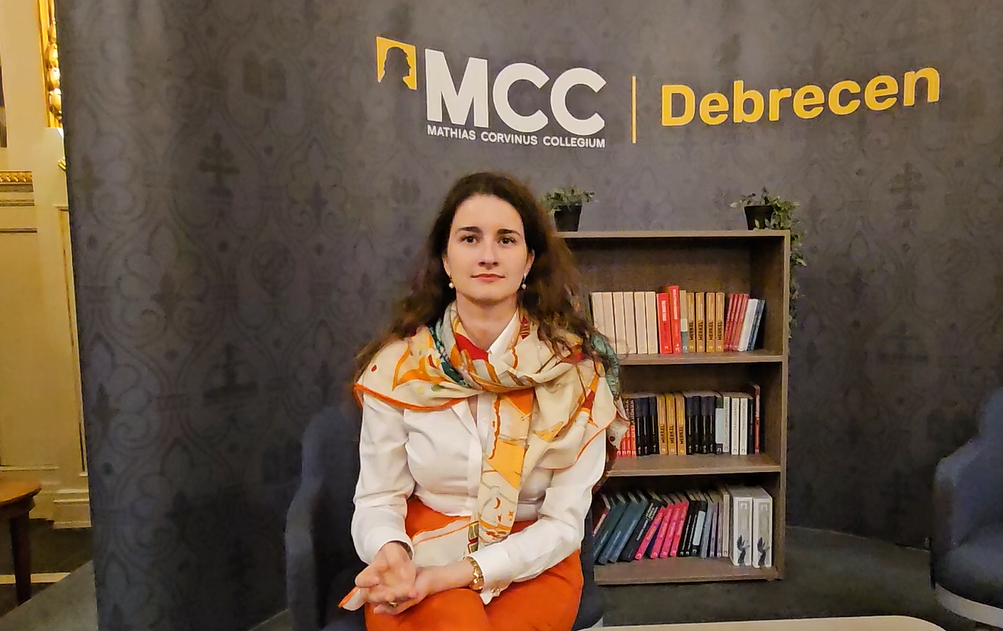
In the interview, Liliana Śmiech, Director General for International Affairs at the National University of Public Service, emphasized that in times of geopolitical uncertainty—such as war, energy crises, and migration challenges—stable and predictable governance becomes especially important. She argued that political leaders should prioritize the safety and well-being of their own citizens while firmly representing national interests on the international stage. She also stressed that decisions about a country’s political direction should primarily be made by its voters, and that democratic elections—not external interference—are the proper way for citizens to express their approval or dissatisfaction with a government.
So, as I understood today, you’ve been talking about the continuity of the government in Hungary. What do you see as the main reason for this continuity?
Well, I believe there are many factors. In times of significant geopolitical instability—energy crises, migration challenges, and other crises—we need a stable government that knows what it is doing and has a firm stance. Most importantly, a government should prioritize the interests of its citizens. Even though I’m Polish and not Hungarian, if I were voting in Hungary, I would want a leader who considers the citizens’ welfare above all else.
Do you think the new government should be different?
No, I don’t think so. I’m not voting here, and other countries should respect the fact that Hungarian citizens will decide for themselves. If they’re satisfied, they will reelect the current government; if not, they will vote for someone else. Interfering in internal politics isn’t helpful. From what I see, there is no other leader in Hungary who so firmly advocates for the country’s interests on the global stage.
Can you give examples?
Sure. For example, prices have risen, and EU funds have stopped temporarily. Similar situations occurred in Poland under previous governments, where issues with EU regulations and judicial reforms led to fines. Once new governments aligned more closely with Brussels, these fines disappeared. Regarding prices, the ongoing war near Hungary’s borders and the global energy crisis naturally affect costs. Unfortunately, these are consequences of the war, which should end as soon as possible.
Speaking of the war, are the sanctions working?
I don’t think so. If they were effective, the war wouldn’t still be ongoing after four years. People are dying in Ukraine, and peace is obviously better than war. I don’t want Polish citizens or Ukrainians to die, so I hope the conflict ends soon.
Would you want a border with Russia?
Poland already has a short border with Russia. Historically, we’ve had difficult experiences with Russia, but we’ve also overcome challenges with Ukraine. For instance, during the Ukrainian refugee crisis, Polish citizens welcomed refugees into homes rather than camps, showing generosity that wasn’t fully recognized internationally. Conflicts over EU grain transit highlighted the complexities of political gratitude and cooperation.
How do you see Hungary culturally and economically?
I’m very grateful for the opportunities here. Hungarian citizens are respectful and friendly, and working at a state university has been a privilege. Rents in Budapest, for example, are lower than in Warsaw, which reflects the housing market and refugee influx. Hungary is beautiful, with sunny weather, Mediterranean spirit, and strong traditions.
What about politics and public sentiment?
Not everyone agrees with every political leader or party, which is natural. Elections allow citizens to choose their leaders. While some may focus on war-related campaigns, voters must decide what is best for themselves. Politically, Hungary shares similarities with Poland in terms of government changes and public opinion, and upcoming elections will show how citizens respond.
Thank you for your insights.
Thank you.
Stability amid storm clouds: Leadership in uncertain times – lecture at MCC Debrecen