







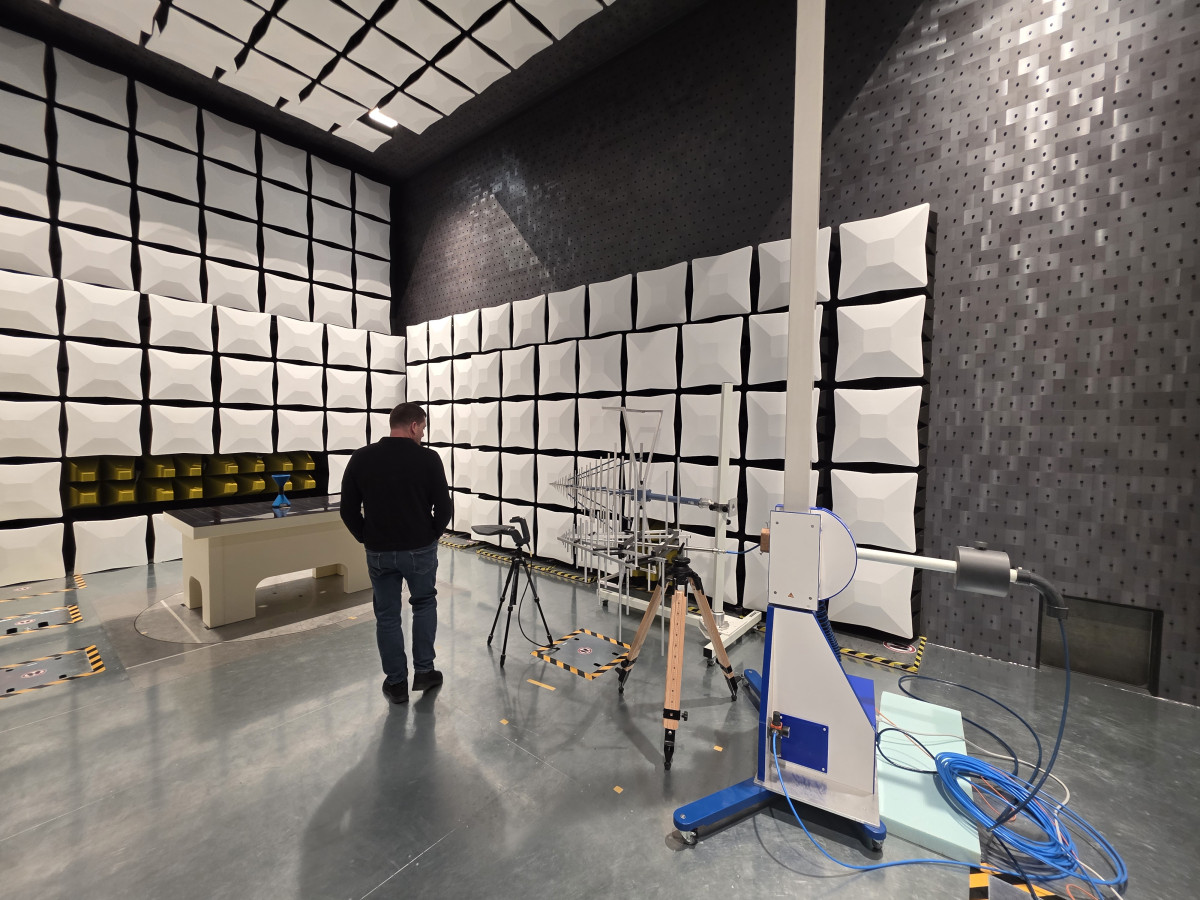
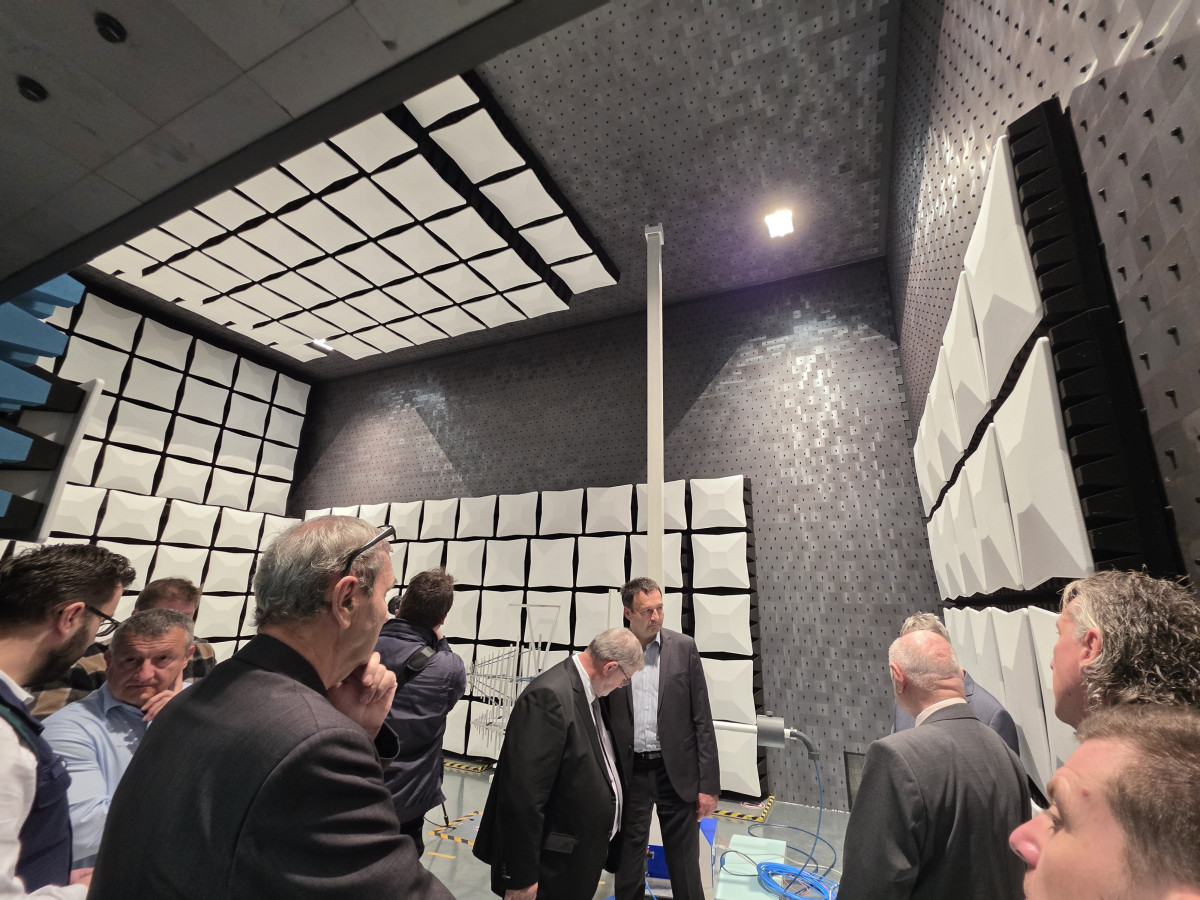
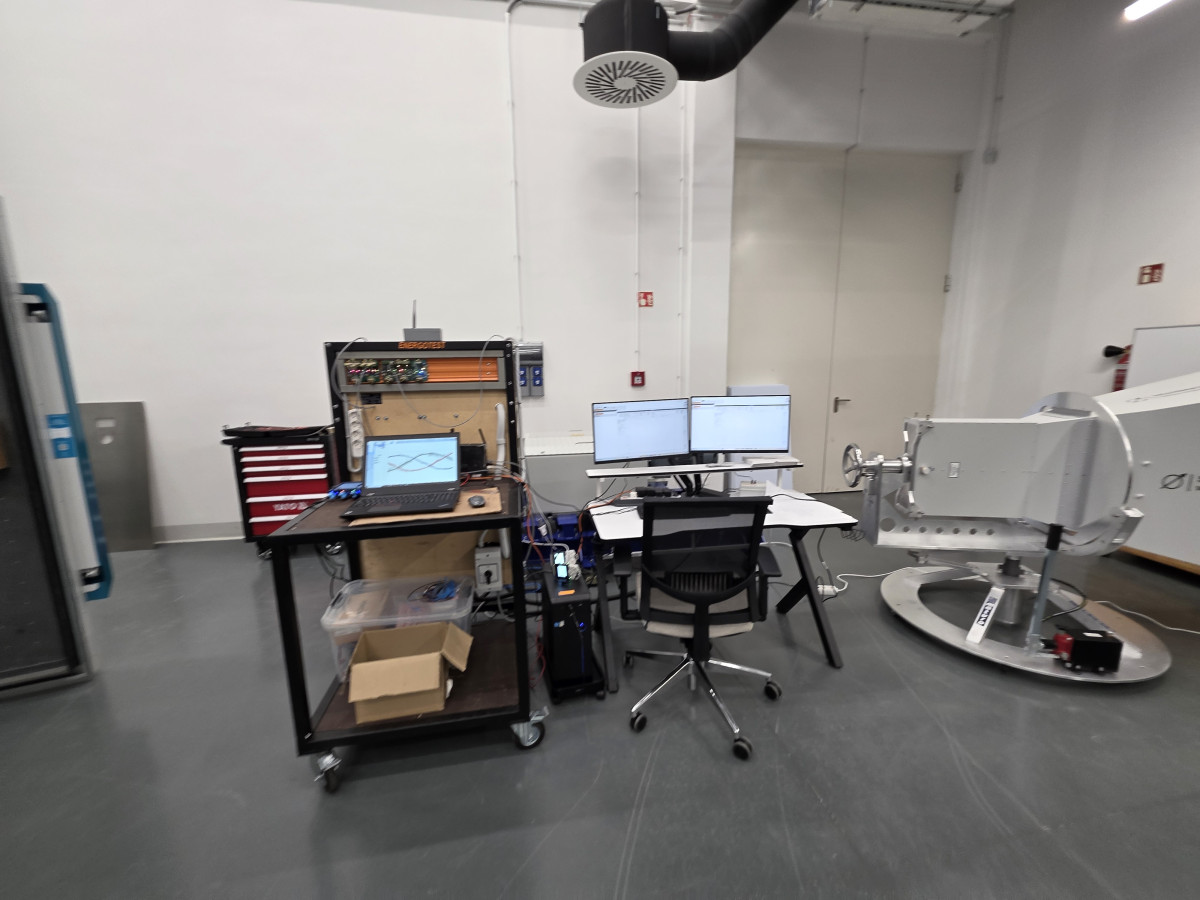
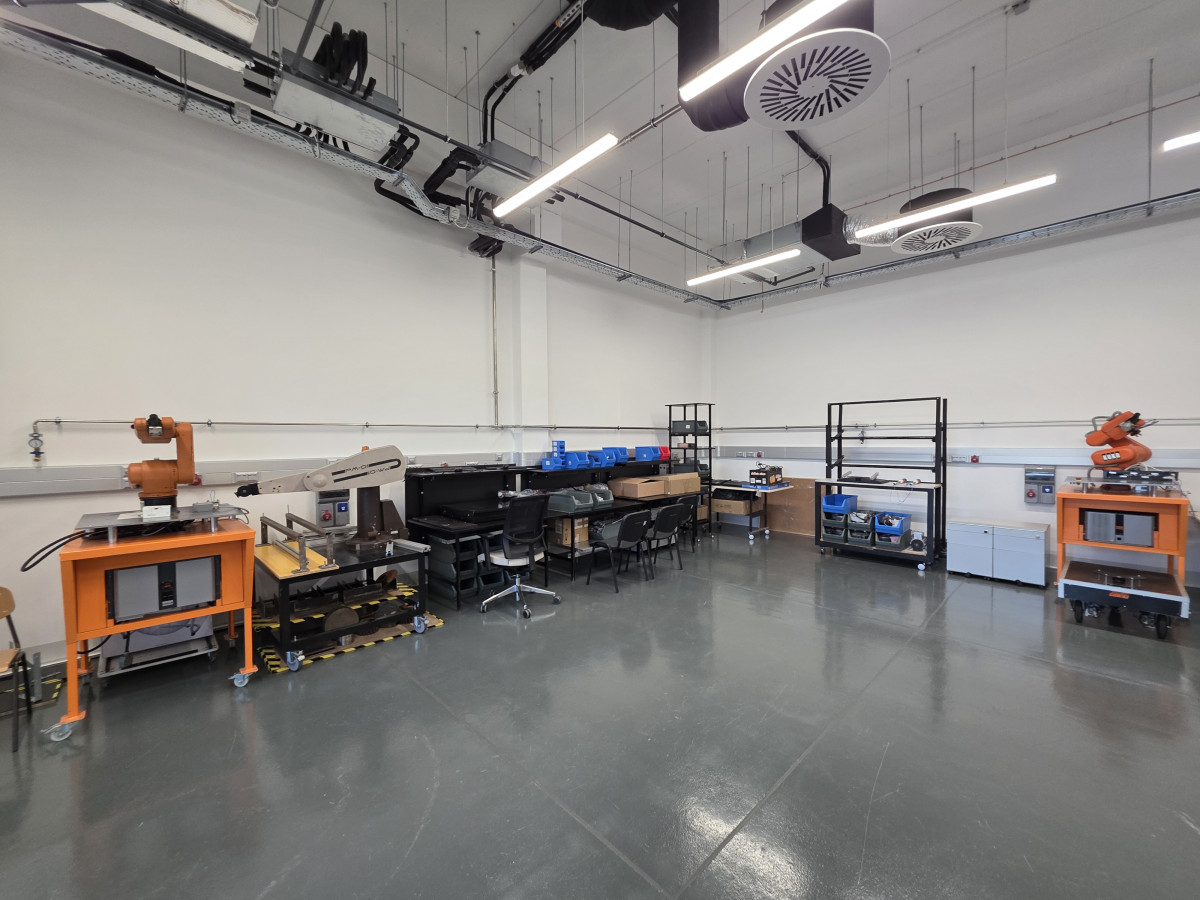
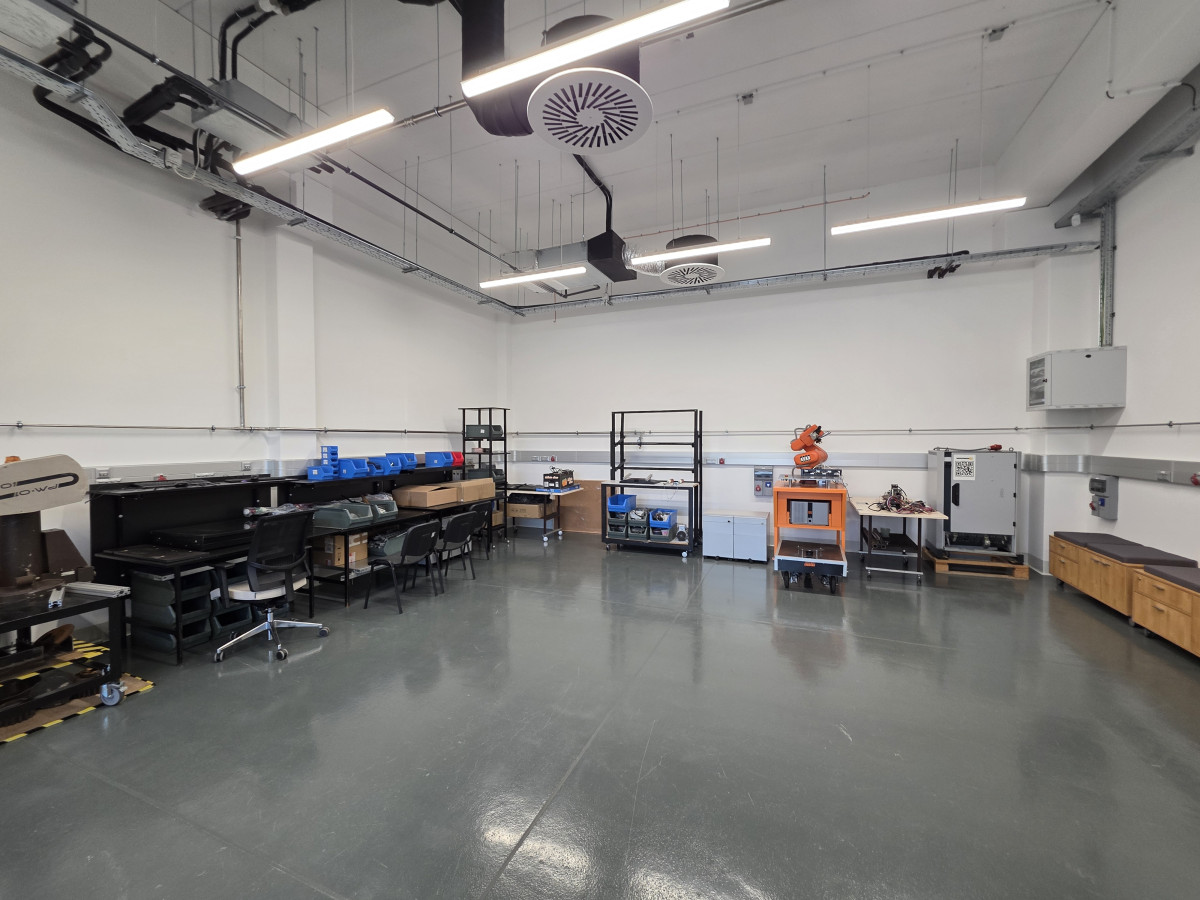
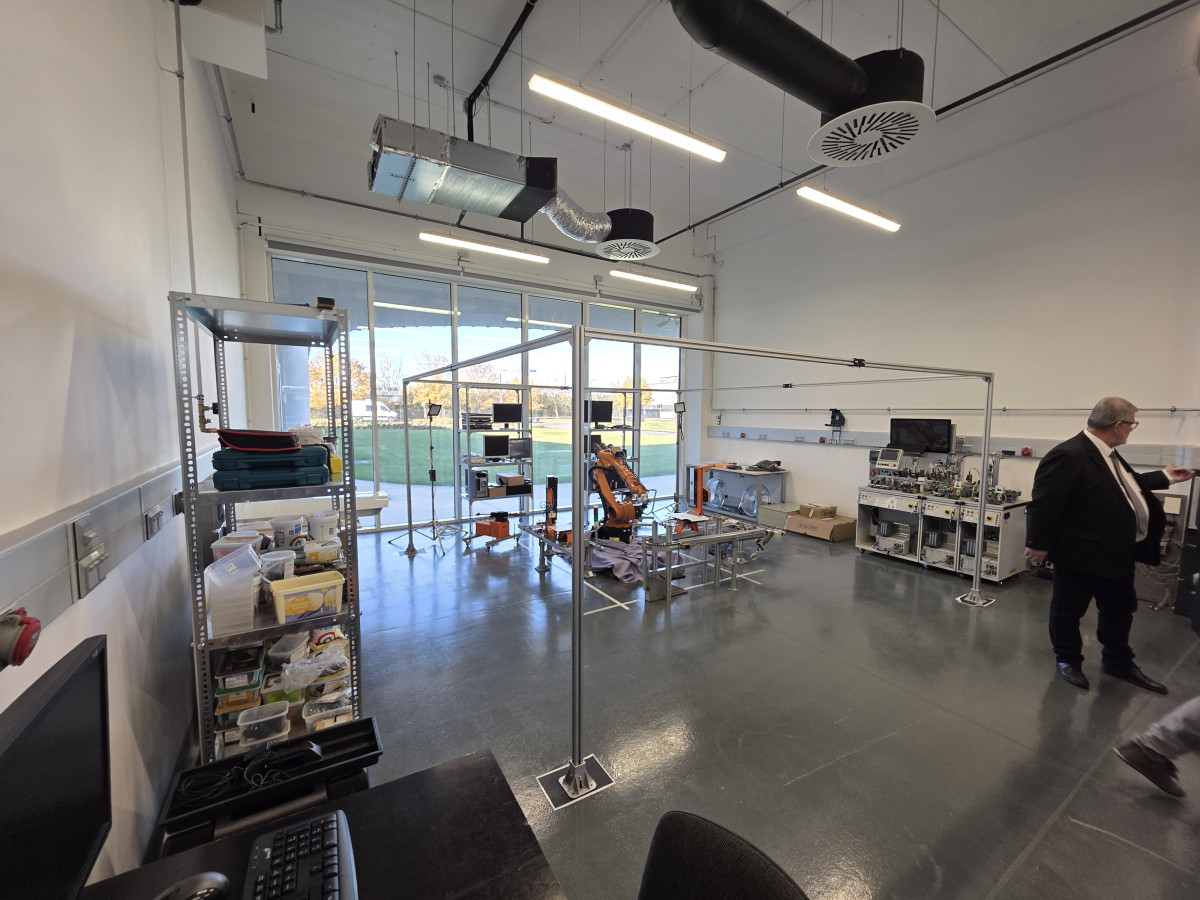
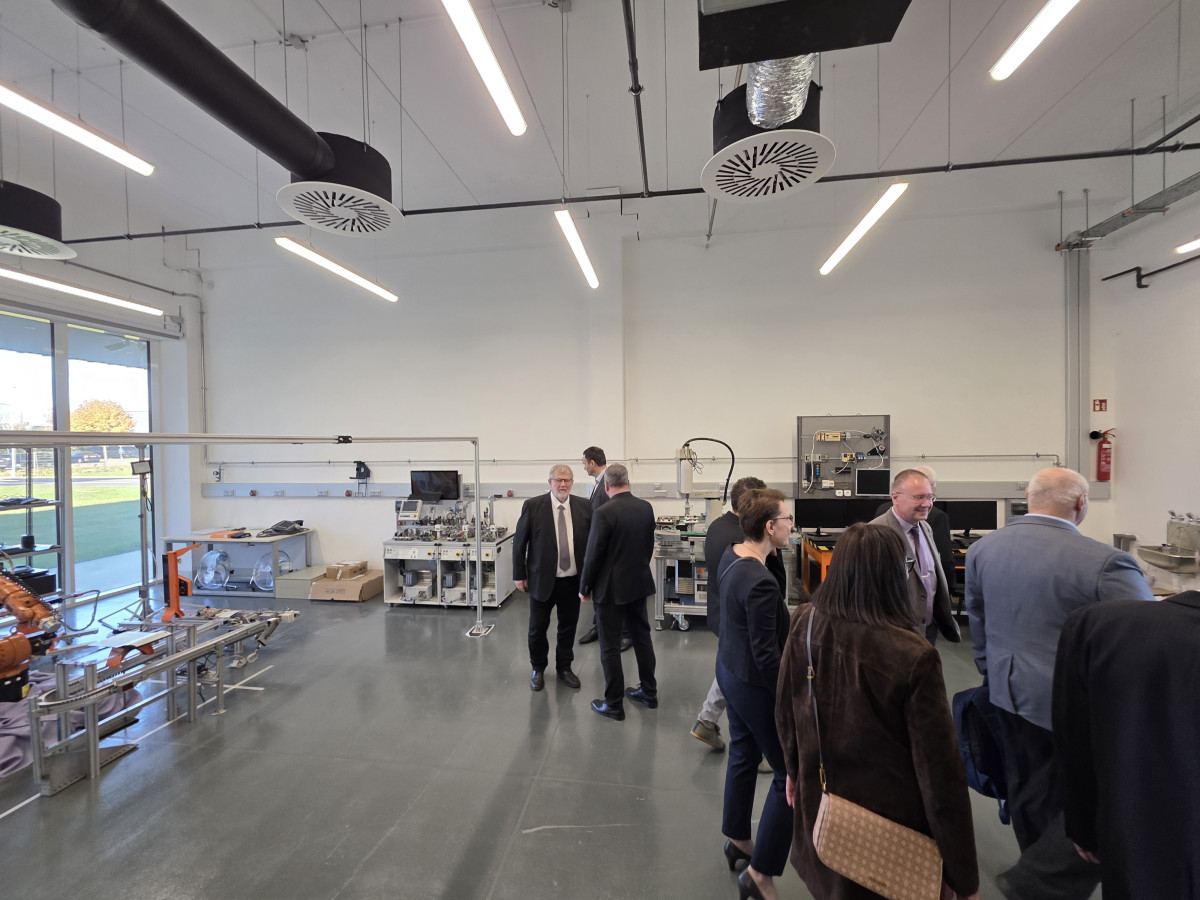
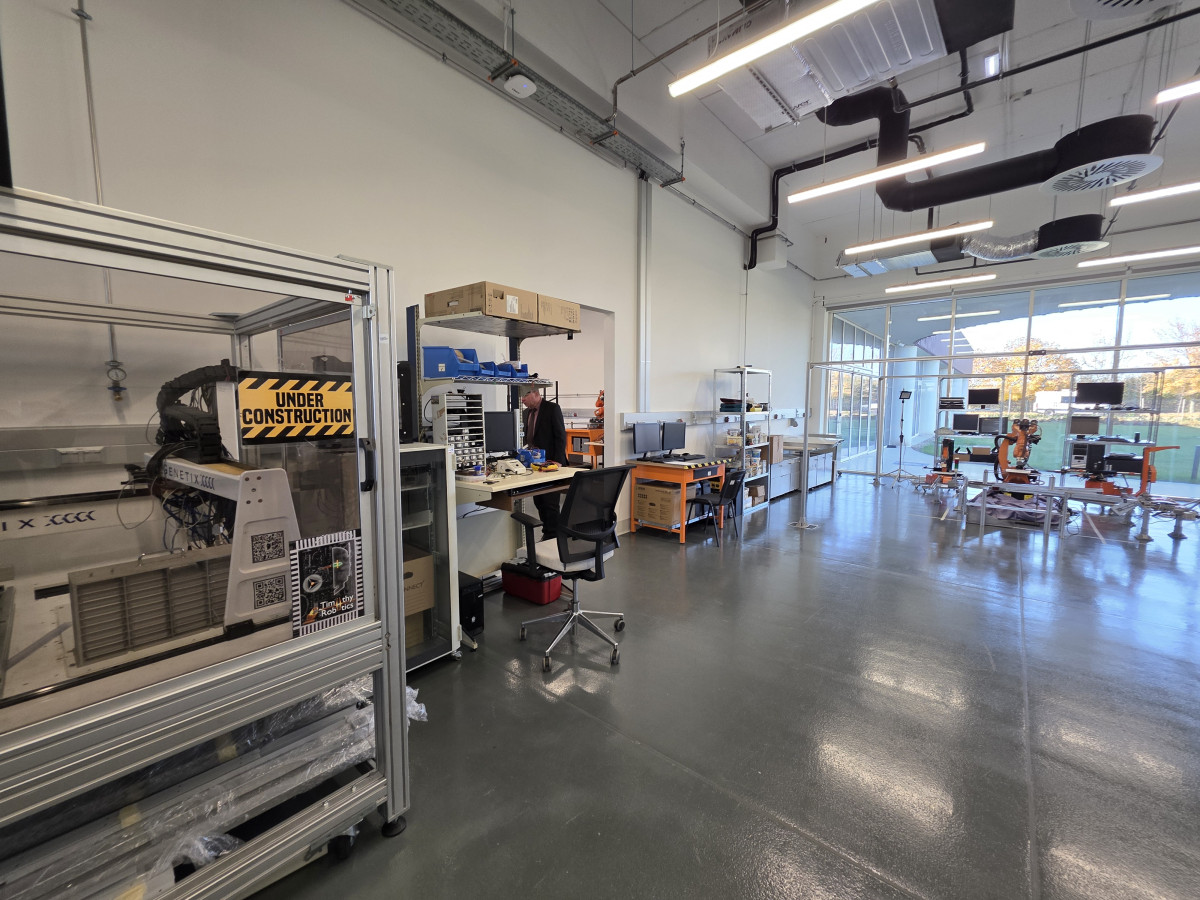
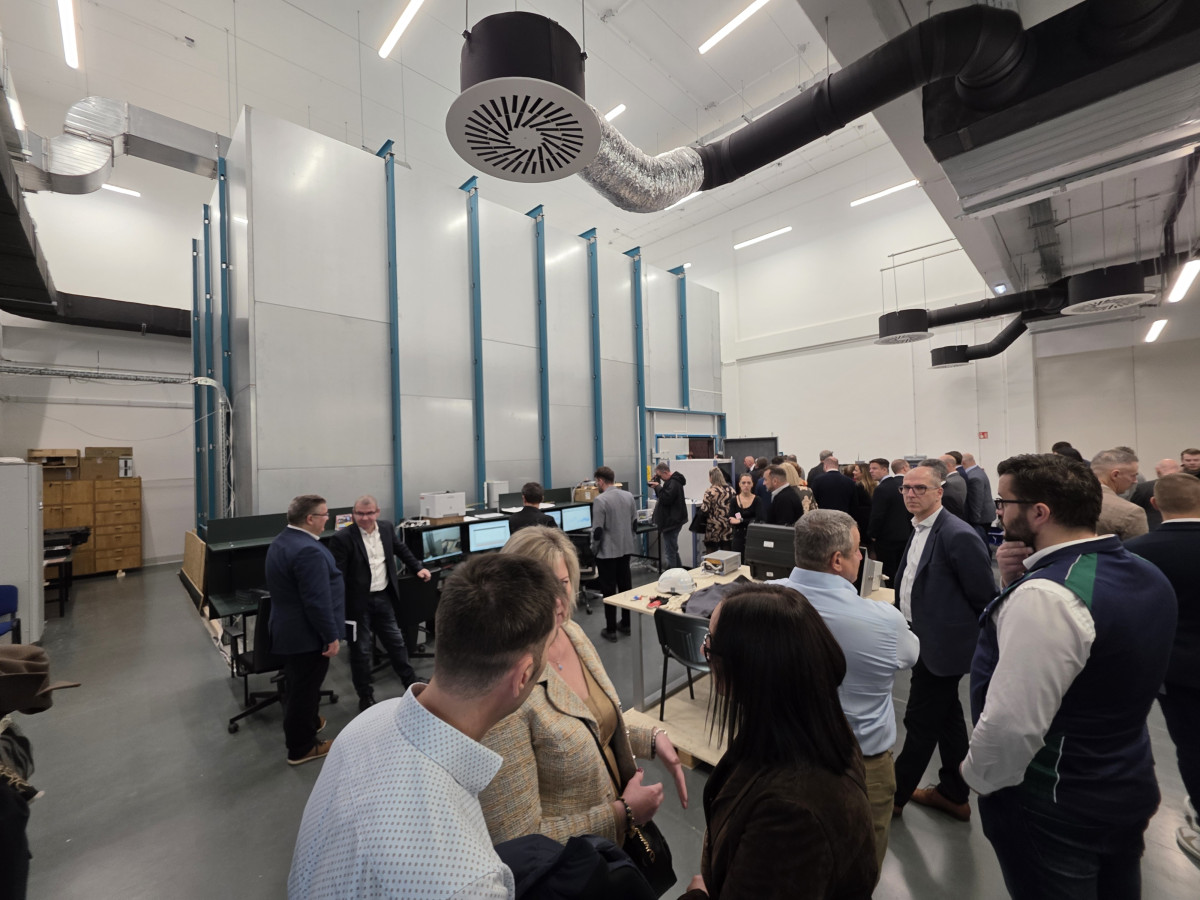
A new 2,700-square-meter Vehicle Laboratory has been completed at the University of Debrecen’s (UD) Science, Technology and Innovation Park. The facility will primarily serve as a venue for education and research related to the automotive industry. The nearly 5-billion-forint investment includes state-of-the-art equipment, workshops, laboratories, classrooms, offices, and even a 1,340-square-meter asphalt test track.
The main purpose of the Vehicle Laboratory is to provide a modern, well-equipped, and comfortable environment for both theoretical and practical training for students of the Faculty of Engineering (MK). Designed by Monostudio Ltd., the facility houses laboratories for vehicle engineering, mechatronics, and robotics, as well as workshops for automotive mechanics and classrooms suitable for smaller courses. Intensive research on the future of mobility will also take place within its walls.
The new laboratory aims to train engineers capable of designing, developing, testing, and manufacturing new, safe, and sustainable vehicles. Graduates will be qualified to work in the automotive industry, development companies, vehicle manufacturers, or service centers.
At the inauguration ceremony, Balázs Hankó, Minister of Culture and Innovation, highlighted that the University of Debrecen ranks among the top 2% of universities worldwide, placing 563rd out of 30,000 higher education institutions.
“We are at a university that has increased its number of scientific publications in top international journals by 55% in the past four years, boosted its innovation revenues by 49% in three years to reach 3.1 billion forints, and raised the number of first-year students from 7,079 to 9,202 in four years,” — said the Minister.
He added that the University of Debrecen is a living network connecting the city, its region, and both domestic and international companies.
“This is a university we can truly be proud of. Over the past decade, the Hungarian government has invested 650 billion forints in higher education — and wisely dedicated every tenth forint of that to the University of Debrecen’s educational and research development. One of the jewels of this effort is the automotive industry,” — emphasized Hankó.
According to the Minister, the government has increased the university’s funding from 22 billion to 83 billion forints in the past four years, which the institution has managed efficiently. Hungary now ranks 7th in high-tech manufacturing, 9th in high-tech exports, and 10th in nurturing young research talent worldwide.
György Kossa, Chairman of the Board of Trustees of the Count István Tisza Foundation for the University of Debrecen (GTIDEA), described the opening day as more than just the launch of a new building:
“The Vehicle Laboratory is not only home to machines and sensors, but also a symbol of a new era of knowledge, innovation, and cooperation. The world is changing rapidly — technology evolves faster than ever. Those who dare to think ahead, invest in knowledge, and build on lasting values will thrive. This laboratory is a research and development center that will not only follow but also shape the future. Here, students won’t just learn — they’ll understand, create, and contribute to the world.”
Kossa added that the facility serves the university’s mission, the region’s development, and the real needs of industry, expecting tangible results such as the development of sustainable technologies, modeling of modern vehicle systems, and the training of professionals who will shape the industry of the future.
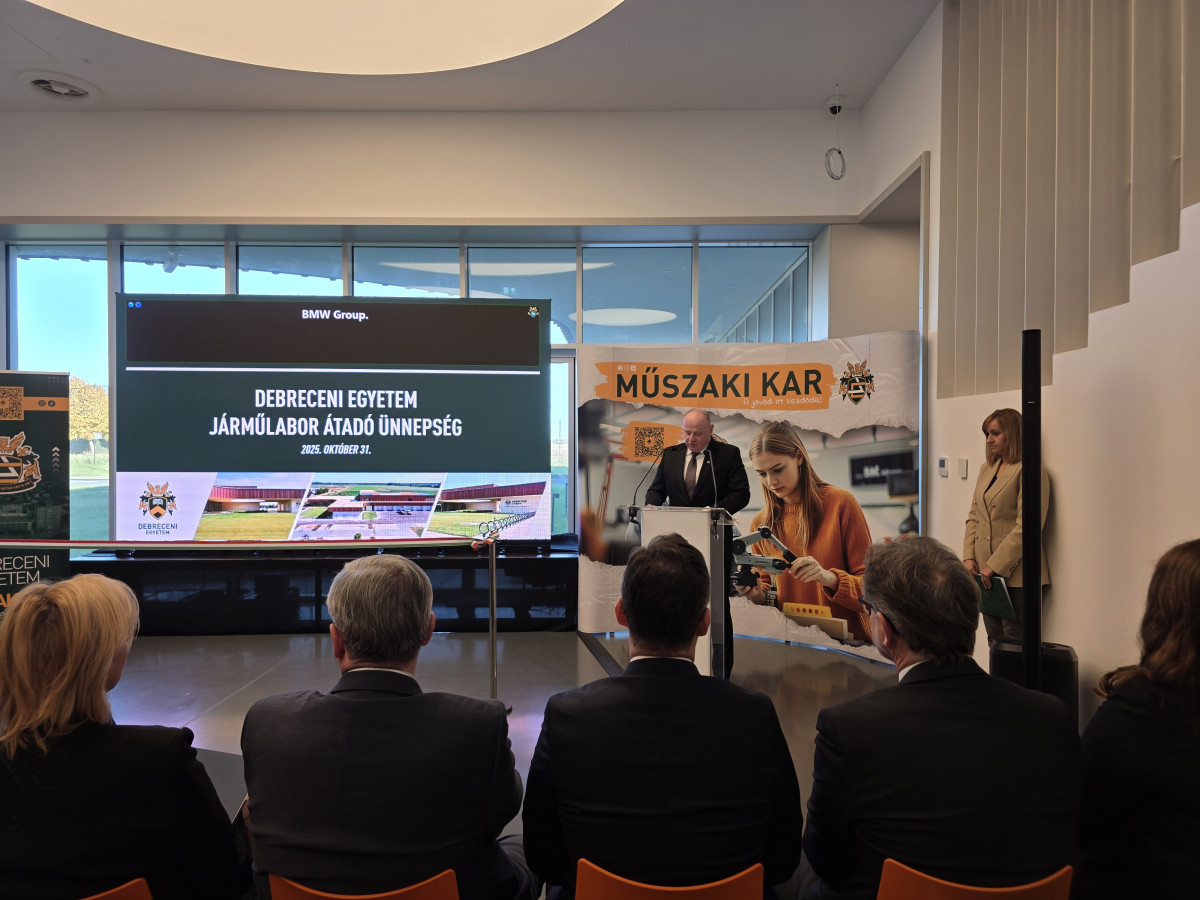
Zoltán Szilvássy, Rector of the University of Debrecen, congratulated the government for securing BMW’s investment in Debrecen amid strong international competition:
“It wasn’t easy — Hungary may be small geopolitically, but in terms of science and innovation, we are on a different level. Cooperation among local leadership, the government, the university, and industrial partners led to the creation of the Debrecen Automotive Cluster, involving all major suppliers, with the university as an associate member and BMW and the city as supporting members.”
He noted that regular workshops are held between BMW and university experts, where new ideas constantly emerge. The rector added that the Innovation Park, which now houses the Vehicle Laboratory, is a source of pride for both the university and the city of Debrecen.
Zoltán Bács, Chancellor of the University, recalled that when BMW chose Debrecen in 2018 for its world-class factory, it became clear that the city had to prepare for it. The Hungarian government decided that Debrecen should become a center of automotive education and research, providing 29.5 billion forints for related developments. The newly completed Vehicle Laboratory is part of this effort.
“The building’s shape is special — viewed from above, it forms the letters ‘J’ and ‘L,’ standing for ‘Járműlabor’ (Vehicle Laboratory). Its design and equipment were developed jointly with BMW to allow the training of their technicians. Activities conducted here are unique in Hungarian higher education,” — said Bács.
He added that the 70-hectare Innovation Park is already home to companies such as Deutsche Telekom and Thyssenkrupp, as well as the Innovation Center, the Pilot Plant, and the Faculty of Pharmacy’s new headquarters. The National Vaccine Factory will also be located there.
“Thanks to the government’s support, Debrecen is becoming a true automotive hub. The area will soon have direct motorway access, and ongoing construction will further expand the park. In a few years, we’ll have a science park comparable to those found across Western Europe,” — he added.
László Papp, Mayor of Debrecen, said the opening of the Vehicle Laboratory marks the beginning of a new phase in the city’s development, built on strong foundations:
“With the opening of the BMW factory, the goal has been achieved — Debrecen is not only a manufacturing center but also a hub for high value-added R&D. University students and researchers are active participants in these developments. This creates the healthiest kind of economic ecosystem, one that will support the city in the long term. The presence of BMW has inspired numerous projects, and the Vehicle Laboratory is a key milestone in this process.”
The mayor emphasized that the University of Debrecen has successfully met labor market challenges, strengthening its technical and scientific programs and establishing partnerships with major tech companies.
“Students now experience firsthand what it means to work with cutting-edge technologies and build the future. The university has become one of Hungary’s most important centers of knowledge and innovation in engineering sciences. Congratulations to its leadership and everyone who contributed to this achievement,” — added Papp.
Hans-Peter Kemser, President and CEO of BMW Group Plant Debrecen, emphasized the importance of innovation and partnership:
“We believe in the power of collaboration, in education, and in innovation. Our shared goal is to shape the future of mobility. This facility opens new doors for young talent.”
He added that BMW values highly skilled engineers and technicians and that the company and the university can learn from each other — with the Vehicle Laboratory providing an ideal setting for cooperation.