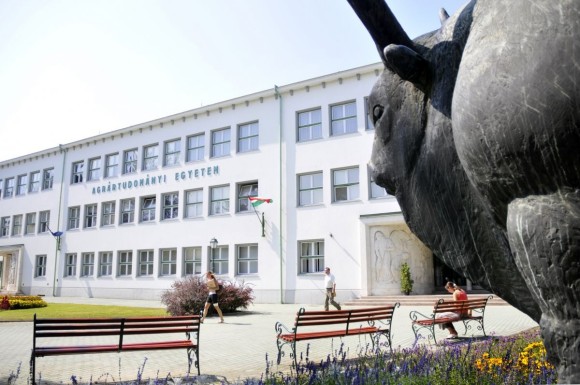







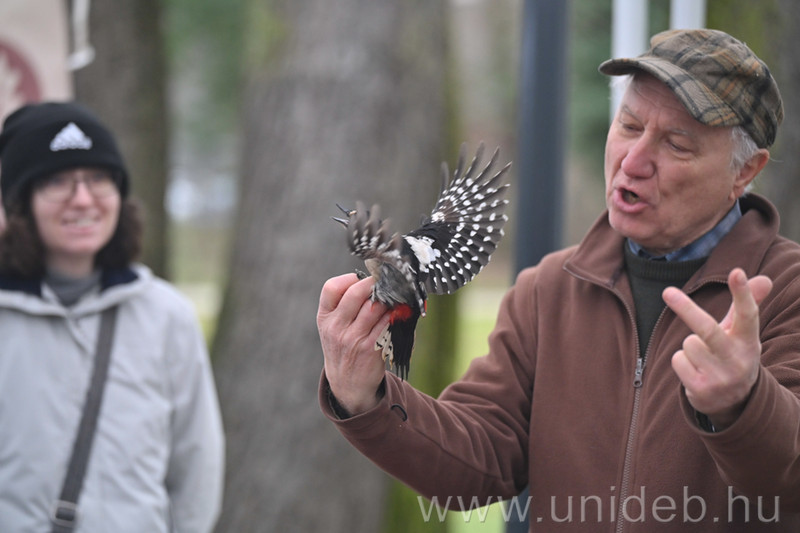
At the University of Debrecen’s Campus on Egyetem Square, a variety of birds—including nuthatches, greenfinches, great tits, blue tits, marsh tits, a great spotted woodpecker, and a European robin—received leg rings. This year’s bird demonstration and ringing event saw more birds captured and marked than ever before, carried out by members of the Student Government Environmental Committee and staff from the Faculty of Agriculture, Food Science, and Environmental Management, the university reported.
Using special mist nets set up in the university’s Botanical Garden, experts captured over 100 unringed birds as well as two already individually identified birds.
Thanks to the rings applied during the event, researchers can track the birds’ movements, determine how fast they reach their wintering or breeding grounds, measure the distances they travel, and even gather information about their age. Marking the birds also helps to better understand their behavior. In Hungary, nearly 300,000–350,000 birds are ringed each year. While modern tracking technologies such as satellite or radio transmitters exist, the leg ring method—first used by Danish ornithologist Hans Christian Mortensen—remains irreplaceable. Even birds equipped with satellite transmitters receive leg rings, as the rings provide each bird with a unique identifier.
—explained Lajos Juhász, head of the Department of Nature Conservation, Zoology, and Wildlife Management, to hirek.unideb.hu.
Traditionally, members of the Student Government Environmental Committee and staff from the university’s Department of Nature Conservation, Zoology, and Wildlife Management ring the birds of the Egyetem Square Campus each year. This year marked the 13th occasion. They record each bird’s species, age, weight, and capture location, while unringed birds are fitted with uniquely coded leg rings. All collected data are uploaded to an online database for research purposes.
The close-up demonstration of the birds also provided an educational experience for the large number of visitors, allowing them to observe species that are normally seen only from a distance in the surrounding environment.
Experts from the university’s Natural History Program and the Hungarian Ornithological and Nature Conservation Society also participated in the University of Debrecen’s green program, offering interactive activities for both Hungarian and international students.