






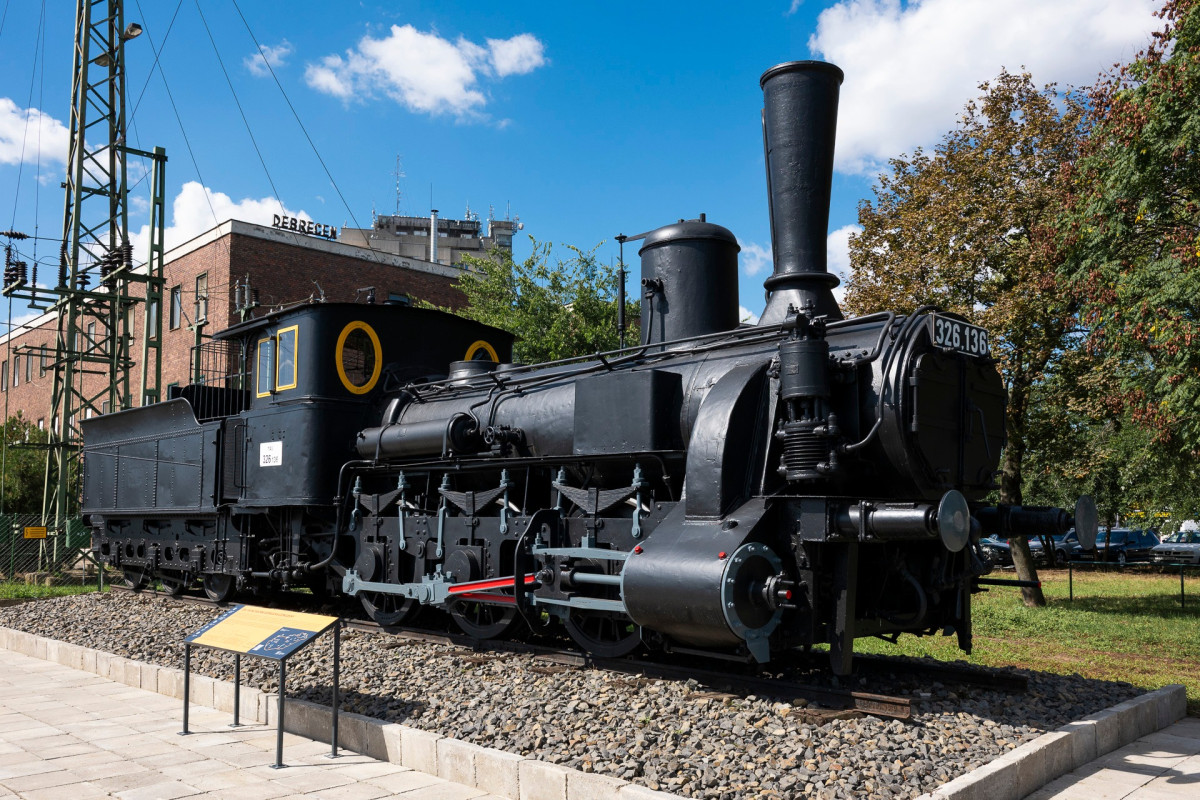
One of the most iconic and most widely produced locomotives in Hungarian railway history has been restored. The steam engine on display in Debrecen was built in 1885 and remained in service until 1979.
The 140-year-old steam locomotive, number 326.136, an iconic landmark of Debrecen railway station, underwent preservation and restoration thanks to the joint work of the Hungarian Museum of Science, Technology and Transport (MMKM) and the MÁV Group, according to a statement sent by the museum to MTI on Thursday.
As the statement explains, due to increasing traffic in the late 1880s, the Hungarian State Railways needed new freight locomotives. This led to the production of the 326 series, built between 1882 and 1898 in 497 units, which became the longest-serving Hungarian steam locomotive type.
Although originally designed for hauling freight trains, the locomotives were also used for passenger services on steep mountain routes. From the early 1900s, shunting operations at major stations were almost exclusively carried out by the 326 series.
After being retired in 1979, the displayed locomotive was added to the Transport Museum’s collection, and in the same year it was exhibited as a monument engine.
The last preservation work was carried out in 2011. More than a decade later, the locomotive has finally undergone corrosion removal and professional repainting, giving the historic vehicle a worthy appearance for the years to come. A new information board was also added, presenting the history and technical data of the monument engine.
The Hungarian Museum of Science, Technology and Transport’s collection includes more than thirty monument locomotives exhibited at railway stations across the country. These relics serve as both historical reminders and symbols of local railway identity, while the museum considers their collection, preservation, and exhibition a fundamental mission.
The restored monument engine was presented and inaugurated on Wednesday at Debrecen railway station.