








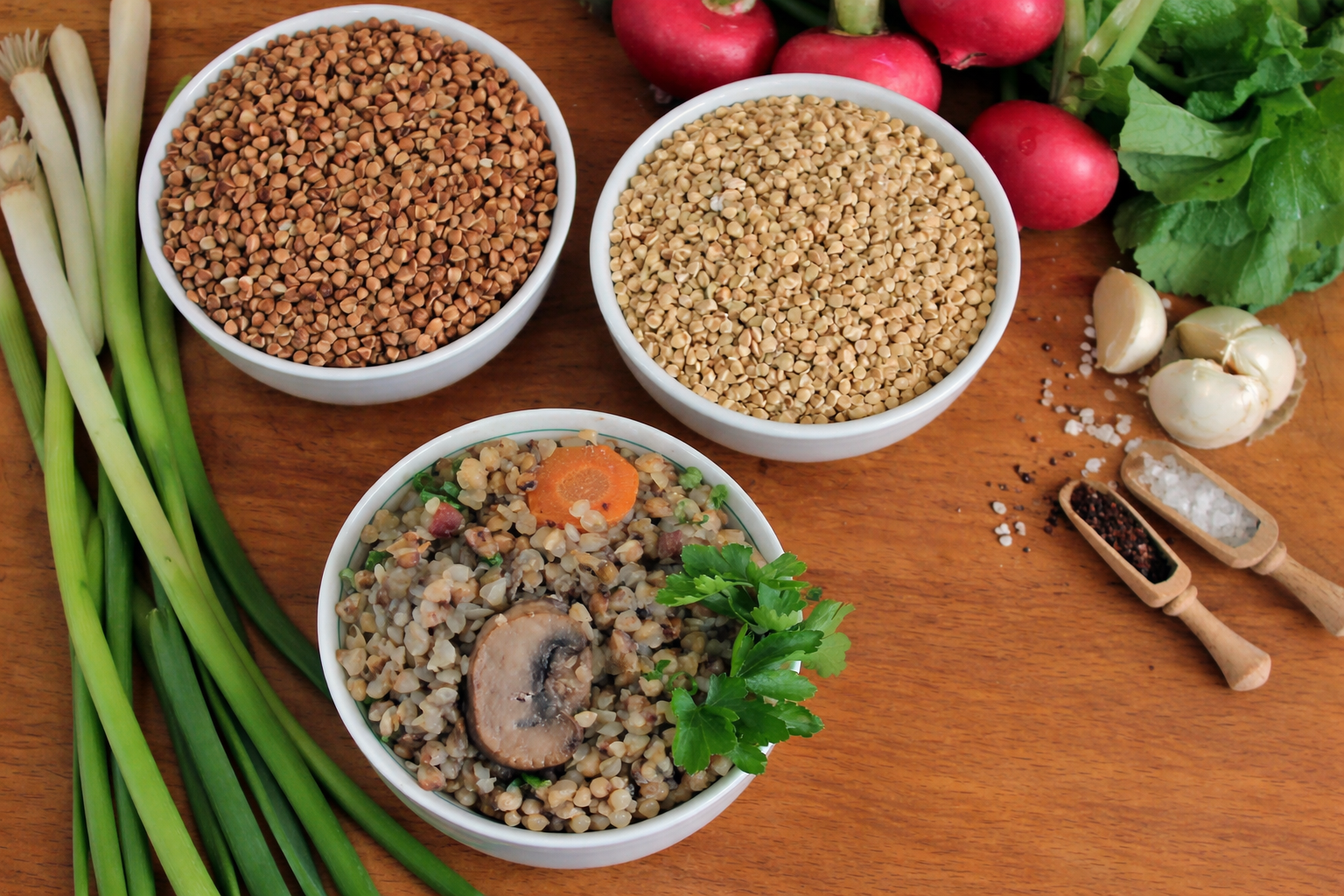
In recent years, interest in buckwheat has increased significantly. It is not only nutritionally valuable but also remarkable from an agricultural perspective. Although its name suggests a cereal grain, it is actually a pseudocereal that fits well into the growing demand for modern functional foods.
Thanks to its gluten-free nature, favorable nutritional profile, and versatile use, more and more consumers are rediscovering it.
A Pseudocereal That Stands Out
Buckwheat (Fagopyrum esculentum) belongs to the knotweed family and originally comes from Central Asia. In Europe, it has strong traditions primarily in Central and Eastern Europe and Asia, but it is also becoming increasingly popular in Western Europe. Its mildly nutty flavor makes it a great base for porridge, pancakes, salads, and side dishes, while its flour—when blended—can be effectively used in bakery products.
What Does 100 Grams of Buckwheat Provide?
Dehulled buckwheat contains approximately 340–350 kcal per 100 grams. Its carbohydrate content is high, around 70–71 grams, but these are mainly complex carbohydrates that raise blood sugar levels more slowly.
Its protein content is nearly 10 grams, which is outstanding among pseudocereals. It also contains essential amino acids such as lysine. Its fat content is low, about 1.5–2 grams, while its fiber content ranges between 3–4 grams.
A True Functional Food
Buckwheat frequently appears on “superfood” lists for good reason. It contains significant amounts of antioxidant flavonoids, including rutin, which may help maintain the elasticity of blood vessel walls.
Its mineral composition is also favorable: its magnesium, iron, and zinc content supports the proper functioning of the nervous system, immune system, and metabolism. Due to its gluten-free nature, it can be safely included in the diets of people with celiac disease or gluten sensitivity.
Oats and Buckwheat: Different Roles, Different Benefits
The question often arises as to how buckwheat compares to oats. From a nutritional standpoint, however, they are not competitors—they serve different purposes. While oats are particularly known for their beta-glucan content, which helps reduce cholesterol levels, buckwheat stands out for its antioxidant profile and favorable amino acid composition. The choice—or even combining the two—depends on individual dietary goals.
Suitable Even for a Low-Carb Diet—in Moderation
Due to its high carbohydrate content, buckwheat is not considered a classic low-carb ingredient. However, with mindful portion control—especially alongside an active lifestyle—it can be a valuable part of a balanced and varied diet.
Bea Szöőr’s atricle can be found here in Hungarian.