







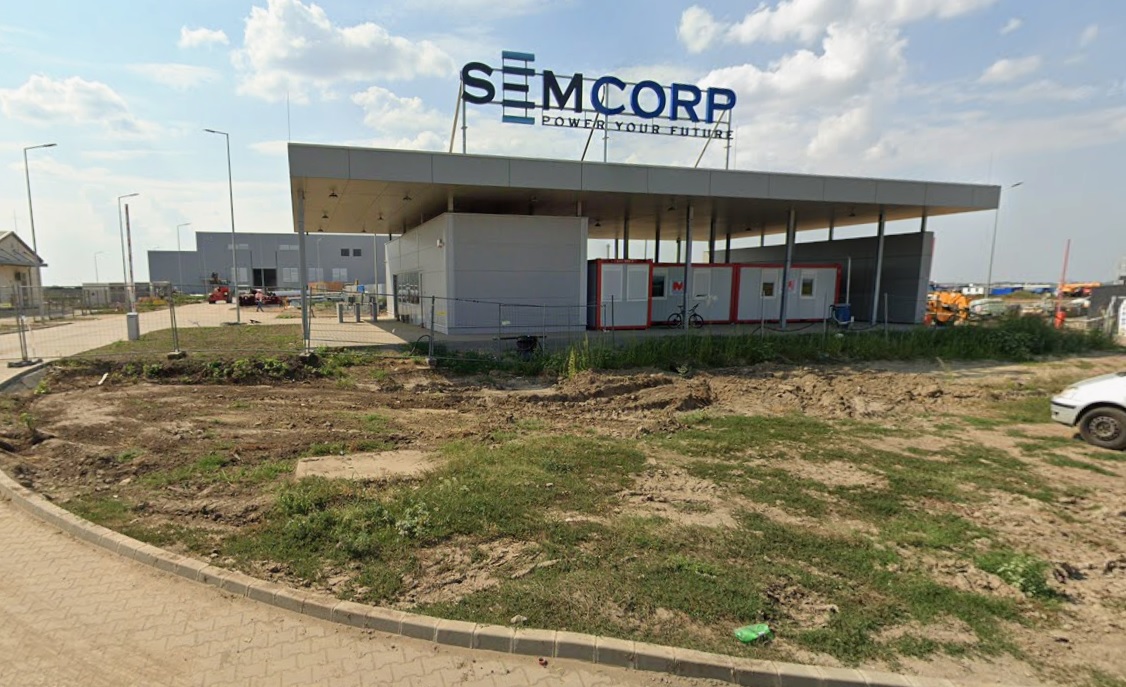
The groundwater contamination discovered at the Debrecen facility of Chinese lithium-ion battery separator manufacturer Semcorp Hungary Kft. does not affect the city’s drinking water sources, Debreceni Vízmű Zrt. (Debrecen Water Utility) said on Monday.
According to the utility, the quality of the drinking water supplied throughout Debrecen meets all standards and remains safe for consumption.
The company explained that the city’s drinking water is supplied by three water production sites located far from the industrial area. The water is extracted from wells between 160 and 230 metres deep, drawing from protected groundwater reserves sealed by multiple impermeable geological layers. In addition, the water sources and production wells are surrounded by continuously monitored observation wells, allowing any changes in water quality to be detected at an early stage.
The utility also highlighted that groundwater in the Debrecen area naturally flows from the northeast toward the southwest—from the city’s drinking water sources toward the industrial zone—rather than in the opposite direction. Groundwater movement is also extremely slow, advancing only 550 to 900 metres per year.
Debreceni Vízmű stressed that eliminating the contamination and restoring the affected site is the responsibility of Semcorp. The Municipality of Debrecen continues to expect a full investigation by the authorities and the prompt implementation of all necessary measures.
Earlier, the environmental authority of the Hajdú-Bihar County Government Office ordered Semcorp Hungary Kft. to carry out accredited sampling from its monitoring wells, stormwater drainage system and storage basin. However, the company submitted the required samples after the deadline.
Based on the laboratory results, the government’s water management and water protection authority found that legal limits had been exceeded for several metals and metalloids—including aluminium, barium, zinc, cadmium, cobalt, chromium, lithium, manganese, nickel, lead, copper, iron and arsenic—both in comparison with regulatory threshold values and with the site’s baseline environmental measurements. As a result, the Government Office suspended the local company’s operations.