








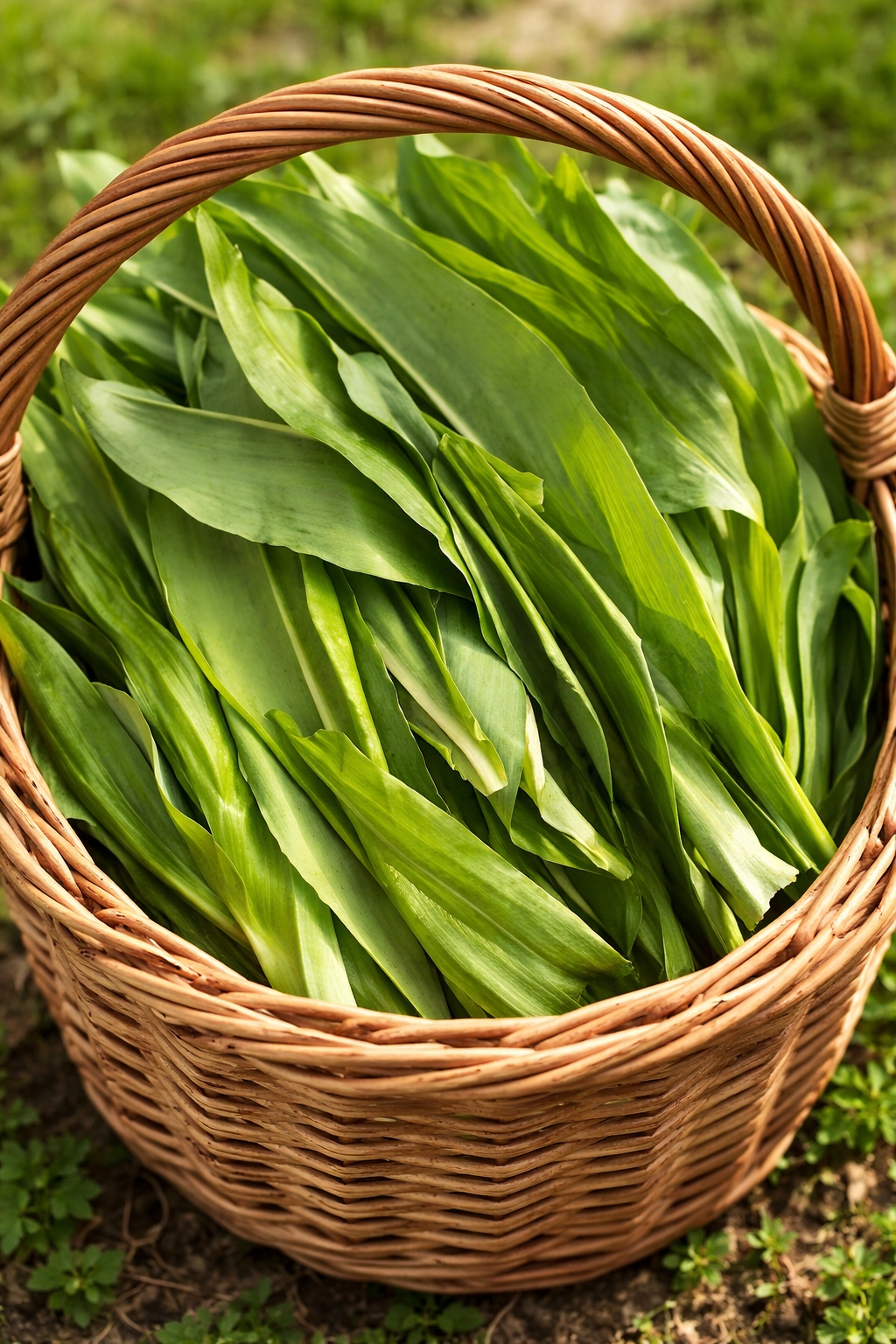
When winter finally loosens its grip, nature seems to come back to life almost overnight. In some forests, fresh, bright green leaves appear on the forest floor, and the air carries a distinctive, slightly garlicky scent. These signs unmistakably show that you have entered an area where wild garlic grows.
Wild garlic can be found across many parts of Europe. In Hungary, it mainly grows in moist, shady forests, often forming vast, continuous patches. From the end of March, it covers the ground like a green carpet. The sight is both impressive and encouraging: the renewal of nature suddenly feels close and tangible. It is valued not only for its beauty but also for its nutritional qualities. Traditional folk medicine has long recognized its cleansing effects, digestive benefits, and positive impact on circulation.
Its fresh flavor is much milder than the garlic commonly used in cooking, making it ideal for light spring dishes. It works well in soups, creams, pesto, or even sandwich spreads, adding a distinctive aroma without overpowering the other ingredients.
Collecting Wisely – Safety Comes First
Foraging wild garlic can be a wonderful shared experience. Families and groups of friends often head out with baskets and cloth bags to gather it together. However, enthusiasm should never replace caution. The leaves of wild garlic can easily be mistaken for those of lily of the valley, which is highly poisonous.
The safest way to identify wild garlic is by its smell: when you rub the leaf, it releases a clear garlic aroma, while lily of the valley is almost completely scentless.
Protecting nature is also an important consideration when collecting plants. As a general rule in Hungary, you may gather up to two kilograms per day for personal use in non-protected areas. It is best to pick only some of the leaves so the plant population can continue to thrive. Responsible foraging is not only a legal matter but also a responsibility toward future generations.
Kitchen Inspiration and Conscious Use
The possibilities for using freshly picked wild garlic are almost endless. It can be chopped and mixed into salads, added to pasta, or blended with olive oil and seeds to make a quick pesto. Many people bake it into scones or bread, while others serve it as a creamy soup on a cool spring evening.
However, wild plants should always be washed thoroughly before use. In forest environments, various contaminants and microorganisms can cling to the leaves, and without proper cleaning they may cause unpleasant surprises.
Wild garlic is therefore more than just a simple ingredient—it represents a true springtime experience: a hike in nature, a culinary discovery, and a refreshing moment close to the natural world. If gathered responsibly and used creatively, this fragrant green plant can easily become one of the season’s favorite ingredients.
Wild Garlic Pesto – A Quick and Classic Spring Recipe
Ingredients (example version):
-
about 100 g wild garlic
-
pine nuts
-
grated hard cheese (e.g., Grana Padano)
-
olive oil
-
chili, salt, and pepper to taste
Preparation (short version):
Blend the washed wild garlic with the other ingredients in a food processor or blender until creamy. The resulting pesto can be used with pasta, spread on toast, or served alongside meats.
Bea Szöőr’s article in English can be found here.